ByShuman Chandra DasReviewed by:Yunus A. Polash
Human WrittenHow to Choose a SaaS Development Company: 12 Key Factors!
A practical guide to choosing the right SaaS development company by evaluating experience, technical expertise, security, pricing, scalability, development process, and post-launch support.
Choosing a SaaS development company is one of those decisions that's easy to get wrong. The right partner can turn a rough idea into a product that actually scales. The wrong one? You're looking at blown deadlines, ballooning costs, security holes, and a maintenance headache down the road.
Here's the tricky part: on paper, most SaaS development companies look pretty much the same. They'll all claim modern tech stacks, "experienced" developers, and a slick portfolio to back it up. So how do you actually tell them apart?
You have to dig deeper than price and coding chops. Things like their real SaaS experience, how they approach architecture, how seriously they take security, how their team is structured, what their development process looks like, how well they communicate, how pricing works, who owns the code, and whether they'll actually be there after launch — that's what separates a good partner from a bad one.
This guide walks through exactly what to look for when choosing a SaaS development company.
What Does a SaaS Development Company Actually Do?
A SaaS development company builds software that people use straight from the internet, no installation or infrastructure management required on their end. NIST's own definition backs this up: SaaS applications run on cloud infrastructure and are accessed through interfaces like web browsers or APIs.
A professional SaaS development company can help with much more than writing code. Depending on the project, its SaaS development services may include:
- SaaS product development
- SaaS application development
- Custom SaaS development
- SaaS architecture design
- Multi-tenant architecture
- Cloud deployment
- API and third-party integrations
- UI/UX design
- SaaS security
- Testing and quality assurance
- Deployment and launch
- SaaS maintenance and scaling
For example, a SaaS product may start with product discovery and MVP planning and later require new integrations, better performance, stronger security, and infrastructure scaling as its customer base grows.
Why Choosing the Right SaaS Development Company Matters
SaaS products are not simply websites with a login page. They often need to support multiple users, recurring subscriptions, permissions, integrations, data security, continuous updates, and growing workloads.
That is why choosing the right SaaS development partner can affect:
- Product quality
- SaaS scalability
- Security and data protection
- Development cost
- Time to market
- User experience
- Long-term maintenance
- Future feature development
A company that understands both your business goals and the technical side of SaaS can help you avoid expensive decisions later.
12 Key Factors to Consider When Choosing a SaaS Development Company
If you are asking, “How do I choose the right SaaS development company?”, start with these 12 factors.
1. Check Their SaaS Development Experience
The first thing to check is whether the company has genuine SaaS development experience.
A company may have years of general software development experience but limited experience building subscription-based, cloud-enabled products.
Ask:
- Have they built SaaS products before?
- Do they understand multi-tenant systems?
- Have they worked with subscription-based products?
- Can they explain the technical challenges of SaaS?
- Have their previous SaaS products remained operational after launch?
Look for relevant SaaS project experience rather than simply counting the number of years a company has existed.
2. Review Their Portfolio and Case Studies
A strong SaaS development portfolio can tell you more than a list of technologies.
Look for:
- Live SaaS products
- Similar business models
- Relevant industries
- Product complexity
- User-facing features
- Integrations
- Long-term client relationships
- Measurable project outcomes where available
Ask the company to show you SaaS case studies and explain what they actually contributed to each project.
A portfolio full of unrelated websites does not necessarily demonstrate SaaS product development expertise.
3. Evaluate Their Technical Expertise
Your SaaS development company should understand the technologies needed for your specific product.
Depending on your requirements, this may include:
- Frontend development
- Backend development
- Databases
- Cloud platforms
- APIs
- Authentication
- Payment integrations
- Third-party integrations
- DevOps
- Testing and monitoring
Do not choose a company simply because it uses a popular technology stack. Ask why that stack is appropriate for your product.
A good SaaS development firm should be able to explain technical decisions in business-friendly language.
4. Look at Their SaaS Architecture and Scalability
Scalability should be considered from the beginning of your SaaS project, not after your product starts experiencing performance problems. Before hiring a development company, ask how they plan the overall SaaS architecture and whether the technology can support your expected user growth over time.
It is also important to understand how the company handles multi-tenant architecture, database design, cloud infrastructure, performance optimization, and load management. These technical decisions can directly affect how smoothly your SaaS application performs as more users and data are added.
A system that works well for a few hundred users may not perform the same way when it needs to support tens of thousands of customers. A reliable SaaS development partner should therefore build with future growth in mind, making it easier to increase capacity, improve performance, and scale the infrastructure when your business grows.
5. Evaluate Security and Data Protection
Security should never be treated as an optional feature in SaaS development.
Ask potential SaaS developers how they handle:
- SaaS application security
- Data encryption
- Authentication
- Authorization
- Access control
- Data isolation
- Backups
- Disaster recovery
- Monitoring
- Data privacy
- Compliance requirements
Access control is particularly important because SaaS products may contain different types of users with different permissions. NIST also provides specific guidance around access control for cloud systems, including SaaS environments.
Your development partner should be able to explain how customer data is protected and how access is controlled.
6. Check Their AI and Modern Technology Capabilities
AI is becoming part of many modern SaaS products, but adding AI simply because it is popular is not always the right approach.
If your product needs AI, ask whether the SaaS development company can handle:
- AI API integration
- LLM integration
- AI-powered automation
- AI-assisted workflows
- Data privacy
- AI infrastructure
- Usage and API costs
- AI scalability
The important question is not “Do you use AI?”
It is:
“Can you use AI where it creates measurable value for the product?”
7. Understand Their Discovery and Development Process
Before the actual development starts, a good SaaS development company should first understand what you want to build and why you want to build it. The process usually starts with product discovery, business and user research, requirement gathering, feature planning, and MVP definition. After that, the team can move into SaaS architecture, UI/UX design, development, testing, deployment, monitoring, and maintenance.
Before hiring a company, ask what they do before their developers start coding. A proper SaaS discovery process can help uncover unclear requirements, unnecessary features, technical challenges, and possible budget issues at an early stage. This can save both time and money as the project moves forward.
8. Examine the Team Structure
The company name and portfolio are important, but you should also know the people who will actually work on your SaaS product. Ask who will manage the project, who will handle the technical architecture, and who will be responsible for development, UI/UX design, and testing. It is also useful to know whether the team will be dedicated to your project or shared across multiple clients.
Clear responsibilities make communication much easier. You should know who to contact when you have a question and who is responsible for making important technical decisions. In many cases, an experienced and well-organized SaaS development team can be more valuable than a large team where responsibilities are not clearly defined.
9. Evaluate Communication and Project Management
Communication can have a big impact on how smoothly a SaaS project develops. Before signing an agreement, understand how the company normally communicates with clients and how often you will receive project updates. Ask whether they use email, Slack, project management tools, video meetings, or another system to keep everyone informed.
You should also understand how they track tasks, handle changes in requirements, review completed work, and deal with technical problems. A reliable development partner should make the progress of your project easy to follow. You should not have to keep asking what has been completed, what is currently being worked on, or whether the project is still on schedule.
10. Compare Pricing Models and Total Development Cost
SaaS development costs can vary significantly depending on the product, features, technology, team, and development timeline. Companies may use different pricing approaches, such as fixed-price projects, time and materials, dedicated development teams, or milestone-based pricing.
When comparing different proposals, do not look only at the number shown at the bottom of the quotation. Check what is actually included in that price. UI/UX design, testing, cloud infrastructure, third-party tools, API usage, security, maintenance, support, and future development can all affect the overall SaaS development cost.
A lower initial quote may look attractive, but it can become more expensive if important requirements are left out. Instead of asking only how much the development will cost, ask what the SaaS product will realistically cost from the first stage of development through ongoing operation.
11. Check Post-Launch Support and Maintenance
Launching a SaaS product is only the beginning. Once real users start using the platform, you may discover bugs, performance issues, security concerns, or new features that need attention. Your product may also require regular updates as third-party APIs, cloud services, browsers, and other technologies change.
For this reason, ask about the company's post-launch support before you sign the agreement. Find out how they handle bug fixes, security updates, performance optimization, monitoring, technical support, and future improvements. A development partner that understands your product after launch can make it easier to improve and scale the platform without starting from scratch with a new team.
12. Confirm Code Ownership and Handover Terms
Code ownership is another important detail that should be clear before development begins. Make sure you understand who will own the source code, intellectual property, design files, and other project assets after the work is completed.
It is also worth asking where the code repository will be hosted and whether you will have access to it during the project. Documentation and proper handover should also be discussed in advance. If your agreement with the development company ends in the future, you should know exactly how the project, code, documentation, and other assets will be transferred to you.
Clear ownership and handover terms can give you more control over your SaaS product and reduce the risk of becoming dependent on a single vendor.
Questions to Ask a SaaS Development Company Before Hiring
Before choosing a SaaS development partner, ask direct questions instead of relying only on their website.
Here are some useful questions:
- Can you show me SaaS products you have successfully launched?
- How much SaaS development experience does your team have?
- Have you built multi-tenant SaaS applications?
- Who will work directly on my project?
- What technology stack do you recommend and why?
- How will you design the product for scalability?
- How do you handle SaaS security and data protection?
- What does your SaaS discovery process include?
- How do you manage project scope and timeline?
- What happens if requirements change?
- What does your post-launch support include?
- Who owns the source code and intellectual property?
The quality of the answers can tell you a lot about the company's delivery discipline.
How to Evaluate a SaaS Development Proposal
Once you receive proposals from several companies, do not compare only the final price.
Review the Team Structure
Check whether the proposal clearly identifies the roles, responsibilities, and experience of the people working on your product.
Check the Project Scope
Make sure the proposal explains what is included and what is not included.
A vague scope can create problems later.
Examine the Development Timeline
The timeline should match the product's complexity.
Be careful with promises that sound too fast without a clear explanation of how the scope will be delivered.
Compare the Technology Approach
The proposal should explain why the recommended technology and architecture fit your business requirements.
Review the Risk Management Plan
Ask how the company plans to handle:
- Technical risks
- Security issues
- Scope changes
- Delays
- Third-party dependencies
- Scaling problems
Check Pricing Transparency
Make sure you understand the complete SaaS development budget instead of looking only at the headline price.
How Much Does SaaS Development Cost?
There is no single SaaS development cost that applies to every project.
The final cost depends on product complexity, features, integrations, design requirements, technology, security, team size, and development timeline.
Early-Stage SaaS MVP
An MVP normally focuses on the core features needed to validate the product idea.
Costs may include:
- Product discovery
- UX/UI design
- Core development
- Basic integrations
- Testing
- Initial deployment
Mid-Stage Production SaaS
A production-ready SaaS product may require:
- More advanced architecture
- Better security
- Payment systems
- Analytics
- Integrations
- Performance optimization
- Monitoring
- More extensive testing
Enterprise-Level SaaS
Enterprise SaaS products can involve additional requirements such as:
- Advanced security
- Complex permissions
- High scalability
- Enterprise integrations
- Compliance requirements
- Dedicated infrastructure
- Advanced monitoring and support
So when calculating the cost to build a SaaS application, consider the full product lifecycle rather than only version one.
Red Flags to Watch for When Choosing a SaaS Development Company
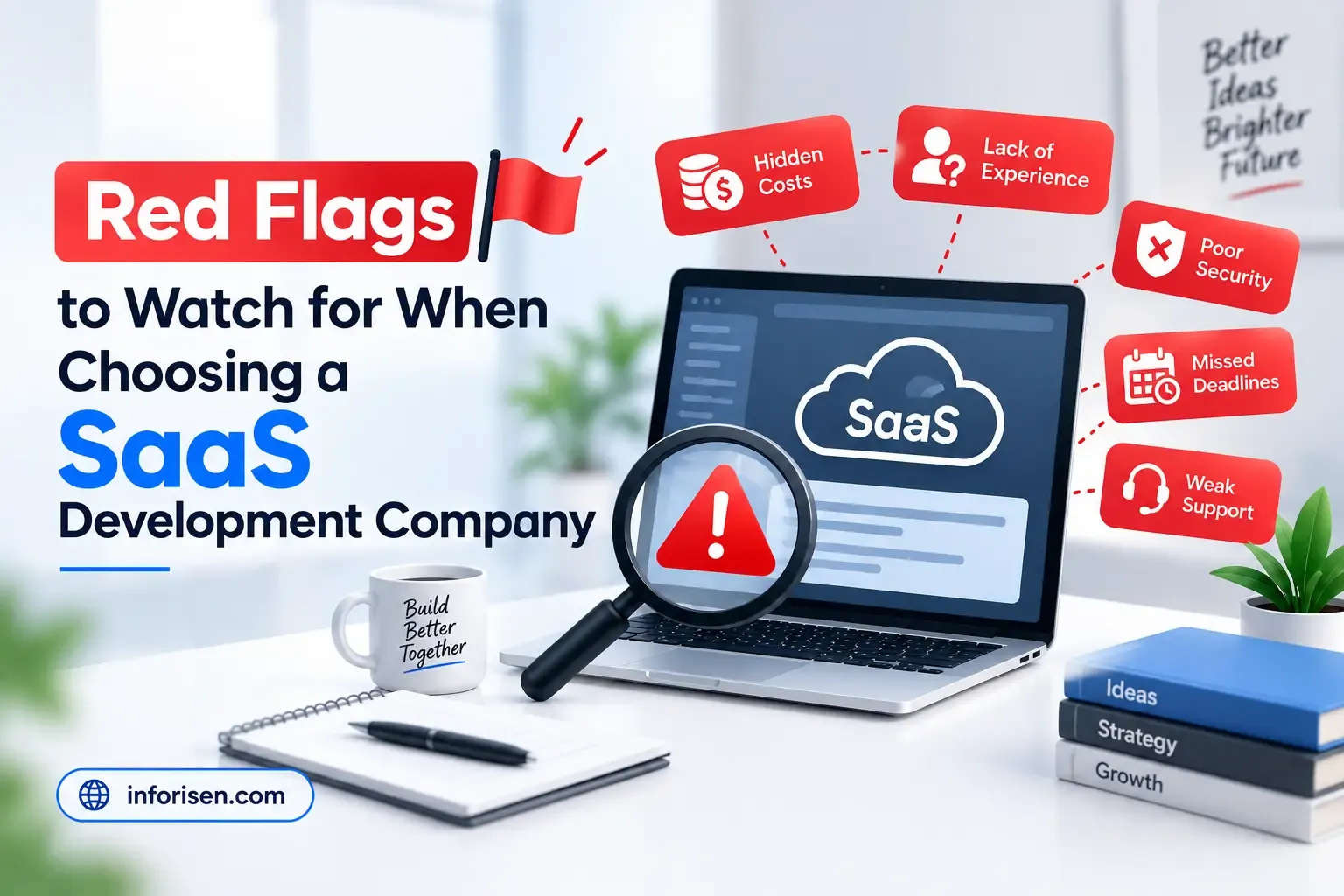
Some warning signs deserve extra attention.
Unrealistic Promises
Be cautious when a company promises a highly complex SaaS product in an unusually short timeframe without discussing scope.
Extremely Low Quotes
A very low quote may mean important work has been excluded.
No Relevant SaaS Portfolio
If a company cannot demonstrate relevant SaaS development experience, ask why you should trust them with a complex SaaS product.
Unclear Team Structure
You should know who is actually responsible for your project.
No Discovery Process
Jumping straight into development without understanding users, business goals, and requirements can create unnecessary rework.
Vague Timeline
A timeline should be connected to deliverables and milestones.
Poor Communication
Slow or unclear communication during the sales stage can become a bigger problem during development.
No Clear Ownership Terms
Source code, intellectual property, repository access, and handover should be clearly addressed.
No Post-Launch Support
If the company disappears immediately after launch, you may need another team for maintenance and scaling.
How to Compare Multiple SaaS Development Companies
If you are evaluating several SaaS development agencies or firms, use a simple framework rather than choosing based on price alone.
You can score each company internally against the same criteria, but keep the actual decision based on your product requirements, budget, risk tolerance, and business goals.
Why Long-Term Partnership Matters for SaaS Products
SaaS products are continuously evolving. After launch, your customers may request new features. Your user base may grow. Third-party APIs may change. Security requirements may become more demanding. Your infrastructure may need optimization.
That is why a SaaS development partner should ideally be able to support:
- Continuous improvements
- User feedback
- Product scaling
- Security updates
- New integrations
- Feature development
- Performance optimization
- SaaS software updates
A long-term relationship does not mean you must stay with one vendor forever. It means you should choose a partner whose process, documentation, and technical decisions make future product development manageable.
Final Checklist Before Hiring a SaaS Development Company
Before signing a contract, make sure you can answer “yes” to most of these questions:
- Do they have relevant SaaS development experience?
- Can they show a strong SaaS development portfolio?
- Do they understand your business model?
- Do they have the technical skills your product requires?
- Can they explain their SaaS architecture?
- Have they considered scalability?
- Do they have clear SaaS security practices?
- Is the development process clearly defined?
- Do you know who will work on your project?
- Is communication clearly established?
- Is pricing transparent?
- Are post-launch services available?
- Is source-code ownership clear?
- Is the handover process documented?
If several of these answers are unclear, it is worth asking more questions before moving forward.
Why Inforisen Is The Best SaaS Development Company?
Choosing a SaaS development company is about more than finding developers who can write code. You need a team that understands your product goals, users, technology, and long-term growth. Inforisen brings these areas together to help businesses turn SaaS ideas into practical, scalable digital products.
A Complete SaaS Development Approach
Inforisen supports the SaaS development journey from early planning to ongoing improvement, including:
- Product discovery and planning to define requirements and priorities
- Custom SaaS development based on specific business needs
- Scalable SaaS architecture designed with future growth in mind
- UI/UX development focused on simple and user-friendly experiences
- API and third-party integrations for connected SaaS ecosystems
- Testing and quality assurance before product deployment
- Deployment and maintenance to support the product after launch
Built Around Your Business Goals
A SaaS product should solve a real business or customer problem. That's why technology decisions should follow the product's actual requirements instead of using a one-size-fits-all approach.
Whether you are validating an MVP, building a new SaaS platform, or improving an existing product, Inforisen focuses on creating solutions that can evolve as your business grows.
Frequently Asked Questions
How do I choose the right SaaS development company?
Start by checking SaaS-specific experience, relevant portfolio projects, technical expertise, development process, security practices, team structure, pricing transparency, ownership terms, and post-launch support. The right company should also understand your business goals, not just your technical requirements.
What should I look for in a SaaS development company?
Look for proven SaaS development experience, scalable architecture skills, security knowledge, a capable development team, transparent communication, a structured SaaS development process, reasonable pricing, and long-term maintenance capabilities.
How much does it cost to build a SaaS application?
The cost varies significantly depending on the product's features, complexity, integrations, architecture, security requirements, team size, and development timeline. An MVP will generally require a different budget from a production or enterprise-level SaaS product.
How long does SaaS development take?
There is no universal timeline. A relatively simple MVP may require much less development time than a complex SaaS platform with multiple user roles, integrations, advanced security, and scalability requirements. A reliable company should provide a timeline based on your actual scope.
What questions should I ask a SaaS development company?
Ask about previous SaaS projects, team structure, technology stack, architecture, security, discovery process, development timeline, pricing, communication, post-launch support, and source-code ownership.
Should I choose a fixed-price or dedicated development team?
It depends on your project. Fixed-price development can work well when requirements and scope are clearly defined. A dedicated team or time-and-materials model can provide more flexibility when the product is expected to evolve during development.
How can I verify a SaaS development company's experience?
Ask for relevant case studies, live products, references, details about the team's role in previous projects, and examples of how they handled technical or product challenges. Do not rely only on general claims about experience.
Final Thoughts
Choosing a SaaS development company requires looking beyond price and a polished portfolio. Experience, technology, security, communication, scalability, ownership, and post-launch support all deserve careful consideration.
Take time to compare potential partners, ask direct questions, review their previous work, and make sure their development approach matches your product goals.
The right SaaS development partner should not only help you launch your product but also give you a solid foundation for future growth and continuous improvement.