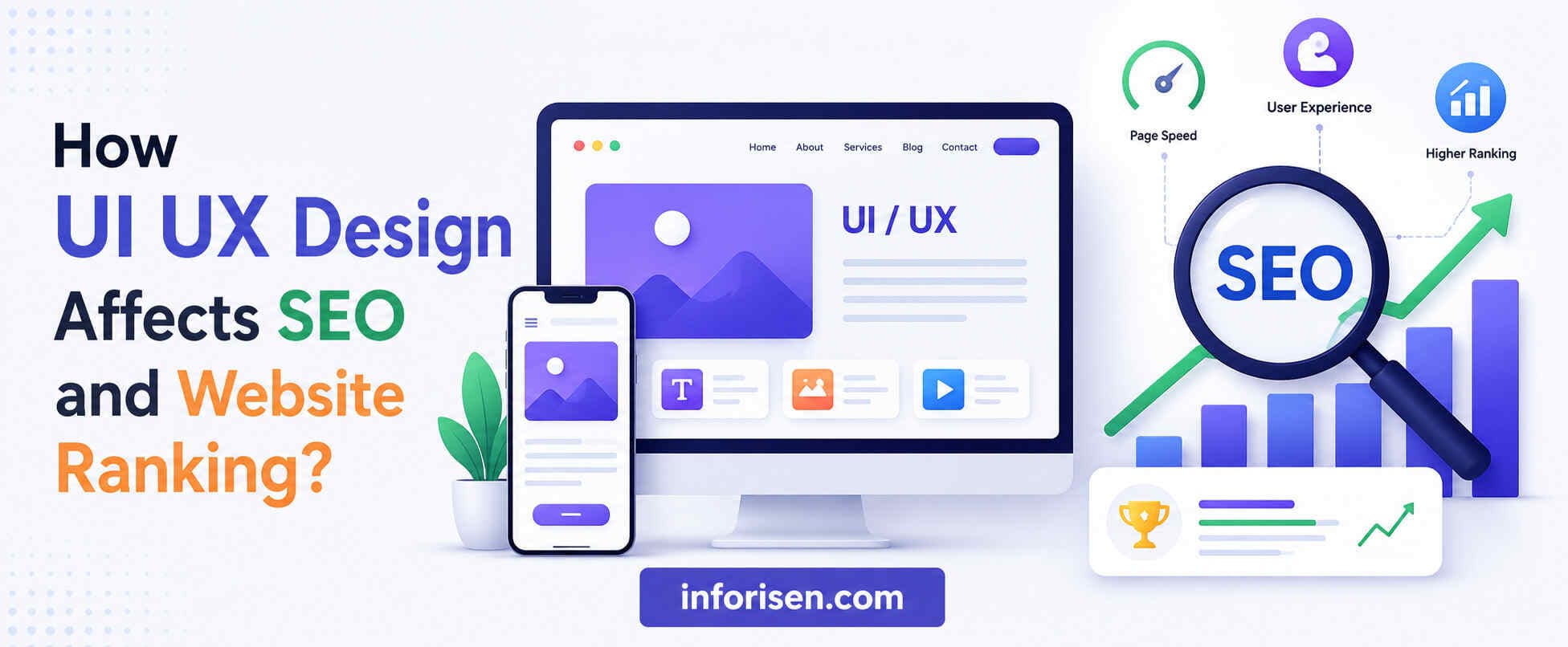
How UI UX Design Affects SEO and Website Ranking?
User experience is very important for SEO today. Search engines do not only look at keywords and backlinks. They also check how people use a website after visiting it.
"Optimizing for quality of user experience is key to the long-term success of any site on the web." — Google Web.dev
User experience is very important for SEO today. Search engines do not only look at keywords and backlinks. They also check how people use a website after visiting it.
Understanding how ui ux design affects seo and website ranking helps businesses get better results online. A fast, easy-to-use website keeps visitors happy and can rank higher in search results. In this article, you will learn how UI/UX design and SEO work together and how better design can improve website rankings.
How UI/UX and SEO Work Together in Modern Search
Many people think SEO and UI/UX are different things. But they work together to help users have a better experience.
SEO helps people find a website on Google, while UI/UX makes the website easy to use after they visit. If a website is hard to use, it may not perform well in search results. That is why the Impact of website UI UX on SEO performance is important for website owners.
Search engines want users to have a good experience, so good design can help improve SEO and rankings.
Why User Experience Is Important for SEO Ranking
Search engines aim to provide the most useful and satisfying result for every search query. When users enjoy their experience on a website, they are more likely to remain engaged, explore additional pages, and return in the future.
The growing importance of Why user experience for SEO ranking can be seen through Google's emphasis on page experience, mobile usability, and engagement-focused metrics. Positive experiences often result in:
- Longer session durations
- Higher page engagement
- Improved return visitor rates
- Increased content sharing
- Better conversion performance
These signals help search engines understand whether users are finding value in a website's content. Because of this, user experience has become a foundational component of long-term SEO strategies.
How UI UX Design Affects SEO Ranking Through User Behavior
User behavior metrics show whether visitors find a website helpful. When people enjoy using a website, they usually stay longer, visit more pages, and read more content. This tells search engines that the website is useful.
Good UI/UX design helps users find information easily and keeps them engaged. Poor design can confuse visitors and make them leave quickly.
Key User Signals Influenced by UI/UX
Several important user experience factors can impact how visitors interact with a website and, ultimately, how search engines evaluate its quality.
| User Experience Factor | SEO Influence |
|---|---|
| Fast Loading Speed | Improves engagement and Core Web Vitals |
| Mobile Optimization | Supports mobile-first indexing |
| Clear Navigation | Enhances crawlability and usability |
| Readable Layout | Increases content consumption |
| Accessibility | Expands audience reach |
| Internal Linking | Improves page discovery |
| Visual Hierarchy | Helps users find information quickly |
These factors demonstrate how UI UX design affects SEO ranking by improving the overall quality of user interactions and making websites easier to use.
How Better Navigation Improves SEO Performance
Navigation is one of the most important aspects of user experience. Visitors should be able to move between pages effortlessly and find relevant information without confusion. A clear menu structure, logical page hierarchy, and effective internal linking help users discover more content.
From an SEO perspective, good navigation also helps search engine crawlers understand the structure of a website. When pages are properly organized and linked together, search engines can index content more efficiently, which may improve visibility in search results.
The Impact of Page Speed and Mobile Experience
Modern users expect websites to load quickly on all devices. Even a few seconds of delay can increase bounce rates and reduce engagement. Fast-loading websites provide a smoother experience and are more likely to retain visitors.
Mobile usability is equally important because most online searches now happen on smartphones and tablets. Responsive designs that adapt to different screen sizes improve accessibility and user satisfaction. Since Google uses mobile-first indexing, websites with strong mobile experiences often have a competitive advantage in search rankings.
Why Content Readability Matters for SEO
Even high-quality content can perform poorly if it is difficult to read. Good UI/UX design improves readability through proper typography, spacing, headings, and visual hierarchy. These elements help users scan content quickly and find the information they need.
When visitors can easily consume content, they are more likely to spend additional time on the page, engage with related articles, and return in the future. This improved engagement can contribute to stronger SEO performance over time.
These factors demonstrate How UI UX design affects SEO ranking by improving the overall quality of user interactions. As we move deeper into ranking factors, it becomes clear that design impacts much more than visual appearance alone.
The Google Ranking Factors UI UX Design Connection
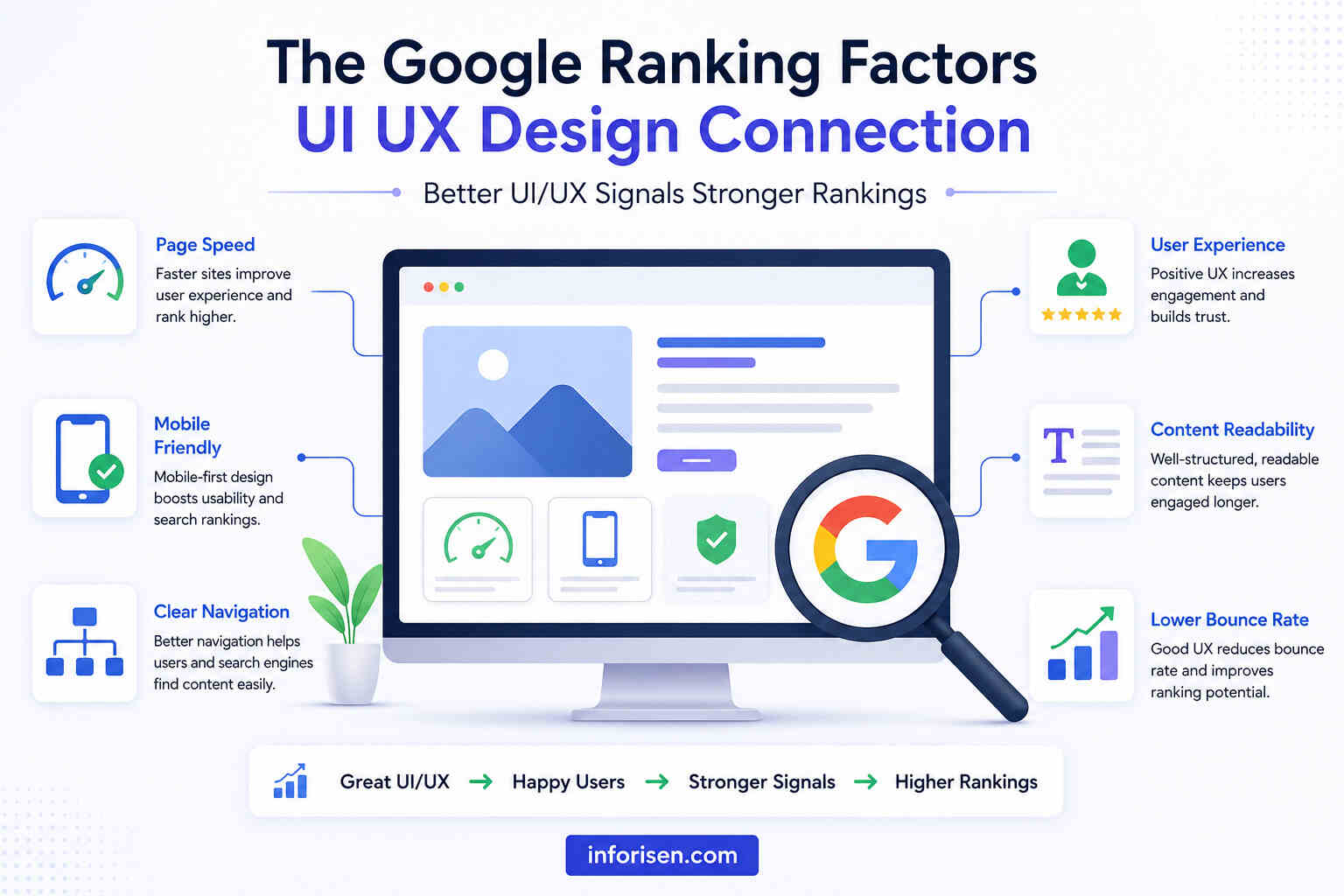
Google's ranking systems increasingly evaluate signals related to usability and page experience. Although there is no direct "UX score," many ranking signals are heavily influenced by design decisions.
The Google ranking factors UI UX design connection becomes evident through metrics such as:
Core Web Vitals
Google uses Core Web Vitals to measure loading speed, visual stability, and interactivity. A poorly optimized design often struggles to meet these standards.
Mobile-First Experience
Most searches now occur on mobile devices. Websites with responsive layouts and intuitive mobile navigation generally perform better than those designed primarily for desktop users.
Site Architecture
Logical information architecture helps both users and search engines understand website content more effectively.
These factors demonstrate why businesses increasingly invest in professional design and development services rather than treating SEO as a standalone activity.
Does UX Design Improve Google Search Ranking?
One of the most common questions among business owners is: Does UX design improve Google search ranking?
The answer is yes—primarily through indirect ranking signals.
A strong UX strategy improves:
- Page speed performance
- Mobile usability
- Visitor engagement
- Navigation efficiency
- Content accessibility
- Conversion pathways
When users can easily interact with a website, they are more likely to stay longer and engage with content. These positive interactions often correlate with stronger search performance over time.
Organizations seeking specialized expertise often rely on UI/UX Design Services to create experiences that align with both user expectations and search engine requirements.
While rankings are important, user retention also plays a major role in SEO success. This brings us to bounce rate and visitor engagement.
How Website Design Affects Bounce Rate and SEO
A visitor's first impression often determines whether they remain on a website or leave immediately. Design quality plays a significant role in shaping that decision.
The relationship between How website design affects bounce rate and SEO is particularly important because poor experiences frequently lead to shorter sessions and lower engagement.
Common Design Issues That Increase Bounce Rate
Slow Loading Pages
Users expect websites to load quickly. Delays create frustration and often result in abandonment.
Confusing Navigation
Visitors should immediately understand where to go next. Complex menus can interrupt the user journey.
Poor Mobile Experience
Mobile users represent the majority of web traffic. A website that performs poorly on smartphones often experiences higher bounce rates.
Cluttered Visual Layouts
Too many competing elements can overwhelm visitors and reduce content consumption.
Reducing these friction points helps create stronger engagement signals, which often contribute to improved organic visibility.
Does UI UX Improve Organic Traffic on Websites?
Organic traffic depends on more than ranking positions alone. It also depends on how effectively a website converts visibility into engagement.
The answer to Does UI UX improve organic traffic on websites? is often yes because better experiences maximize the value of existing search traffic.
When user experience improves:
| Benefit | Impact |
|---|---|
| Longer Visits | Higher engagement |
| Better Navigation | More page views |
| Improved Trust | Higher conversions |
| Easier Content Discovery | More internal page visits |
| Positive Brand Experience | Increased return visitors |
Over time, these improvements can contribute to stronger rankings, better user satisfaction, and sustainable organic growth.
Core UI UX Elements That Have the Biggest SEO Impact
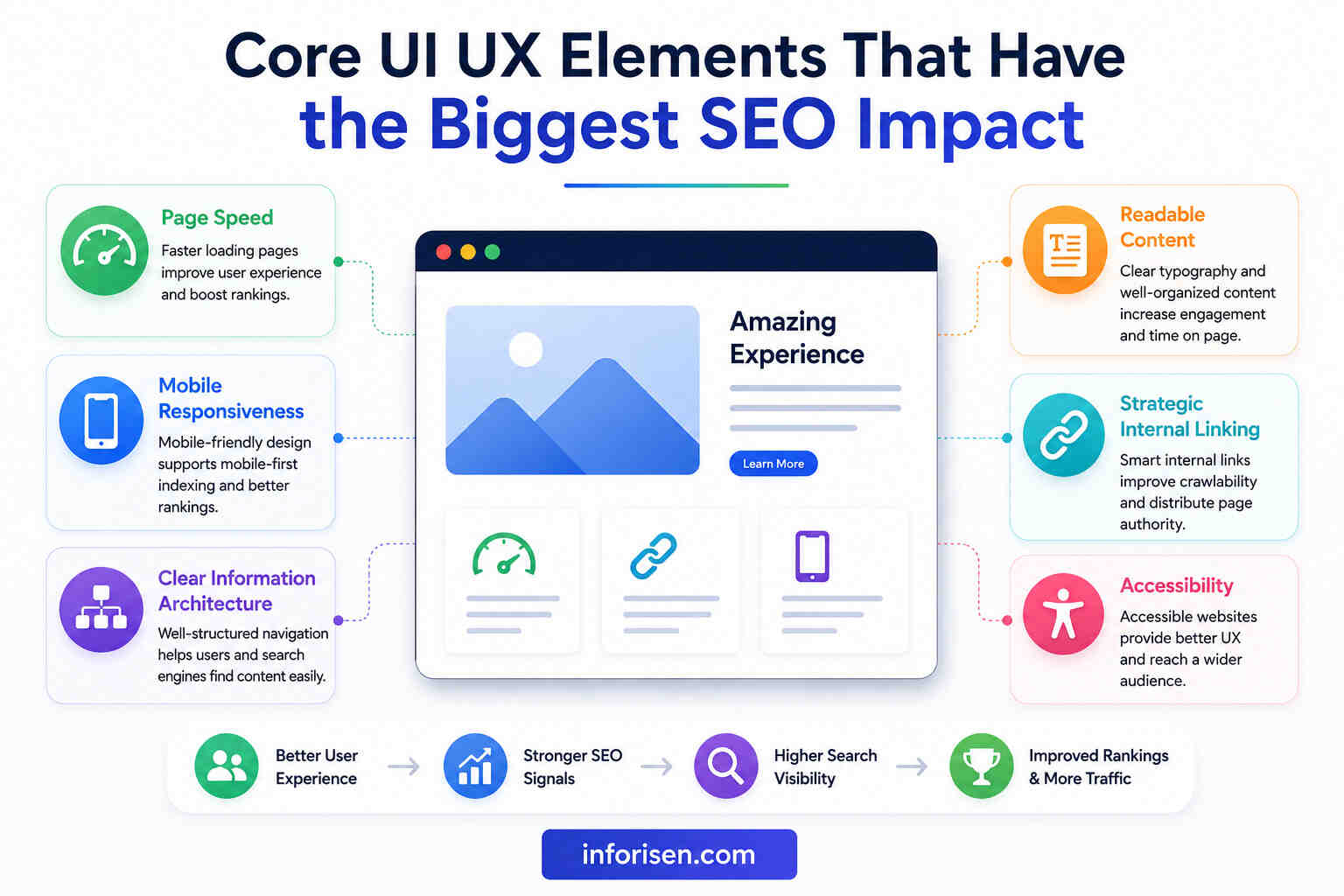
Not every design element affects SEO equally. Some have a greater influence on user satisfaction and search performance.
Mobile-First Design
Responsive websites provide a consistent experience across devices and align with Google's mobile-first indexing approach.
Page Speed Optimization
Fast-loading websites improve engagement while supporting Core Web Vitals requirements.
Content Readability
Well-structured content with clear headings, spacing, and typography helps users consume information more efficiently.
Strategic Internal Linking
Internal links guide users toward relevant information while helping search engines discover additional content.
For example, businesses exploring design careers may benefit from what skills are required to become a UI UX designer, while companies planning digital projects often require website design and development services that integrate SEO and usability from the beginning.
Together, these elements create a stronger foundation for both rankings and conversions.
How AI Search Engines Evaluate UI/UX and User Experience
Traditional search engines are not the only platforms evaluating websites. AI-powered search systems increasingly assess content quality, structure, usability, and trustworthiness.
Answer Engine Optimization (AEO)
AEO favors:
- Clear answers
- Structured headings
- FAQ sections
- Concise explanations
- Strong topical relevance
Generative Engine Optimization (GEO)
GEO prioritizes:
- Comprehensive topic coverage
- Contextual relationships
- Demonstrated expertise
- Reliable information
AI Optimization (AIO)
AIO systems evaluate:
- Readability
- User engagement potential
- Accessibility
- Content structure
- Semantic depth
Because of these developments, modern websites must combine SEO best practices with exceptional user experiences to remain competitive in AI-driven search environments.
Why Businesses Invest in Professional UI/UX Design
Many organizations invest heavily in SEO but overlook the user experience that visitors encounter after clicking a search result.
A well-designed website removes friction, improves customer satisfaction, and creates stronger conversion opportunities. This is why businesses increasingly seek professional design partners capable of balancing usability and search visibility.
Inforisen is the best UI/UX design agency delivering high-quality designs that help websites rank better on Google.
Businesses can build websites that are easy to use and work well for both visitors and search engines.
The long-term value of strong design extends beyond rankings and contributes directly to business growth.
Measuring the SEO Impact of UI/UX Improvements
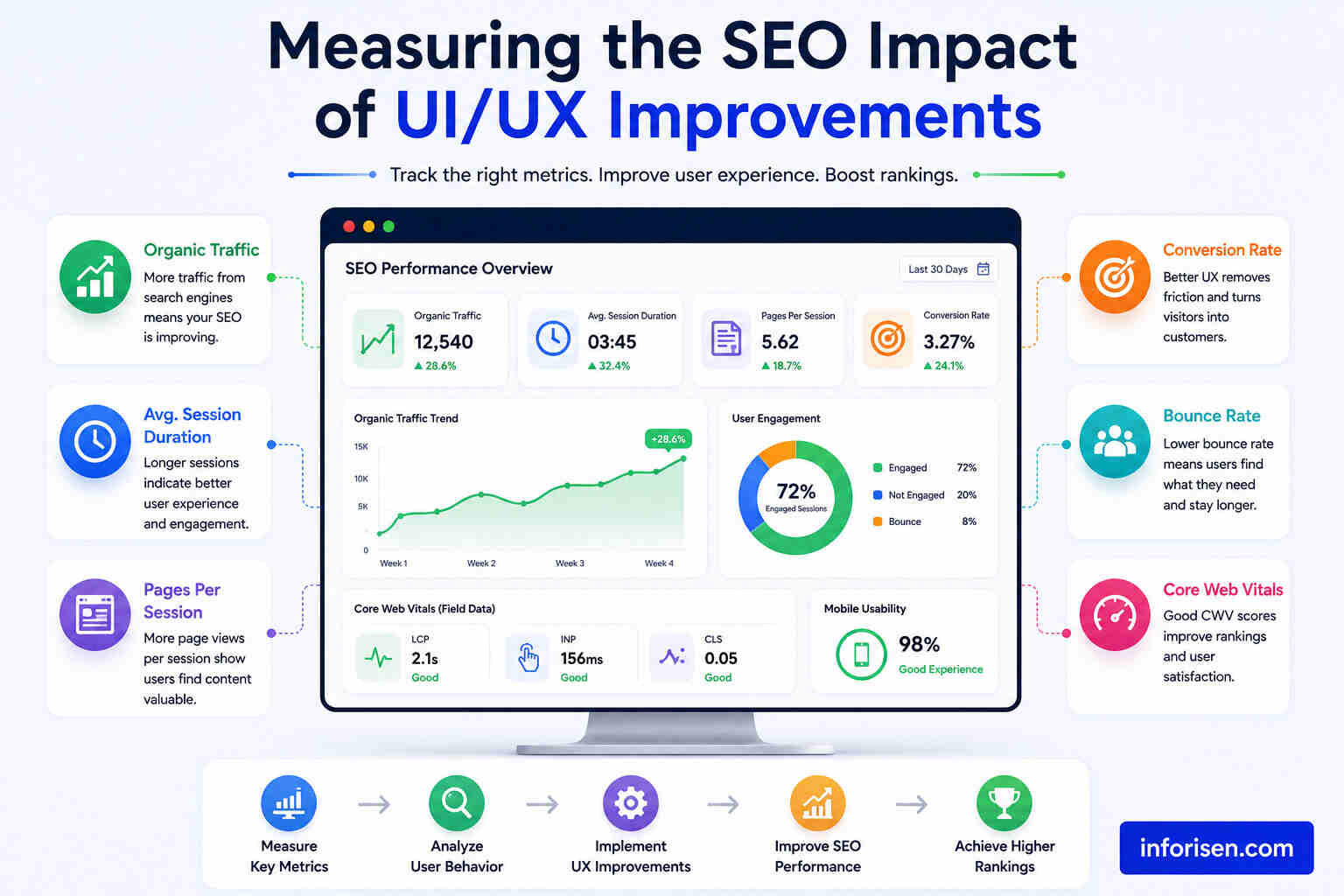
After implementing design enhancements, businesses should monitor measurable outcomes to evaluate success.
| Metric | Why It Matters |
|---|---|
| Organic Traffic | Indicates search visibility growth |
| Average Session Duration | Reflects engagement |
| Pages Per Session | Shows content exploration |
| Conversion Rate | Measures business impact |
| Core Web Vitals | Evaluates page experience |
| Mobile Usability | Supports mobile performance |
| Return Visitor Rate | Indicates satisfaction |
Tracking these metrics helps organizations understand how design improvements influence search performance and customer behavior.
Frequently Asked Questions
UI/UX design affects SEO by improving user engagement, page speed, navigation, mobile usability, and accessibility. These factors contribute to better user experiences, which can positively influence search visibility.
Yes. UX design indirectly improves rankings by enhancing engagement signals, mobile usability, Core Web Vitals performance, and overall user satisfaction.
Search engines prioritize websites that satisfy users. Positive experiences often lead to higher engagement, longer visits, and improved content consumption.
Poor design can cause visitors to leave quickly. Fast loading speeds, clear navigation, and mobile-friendly layouts help reduce bounce rates.
Yes. Better user experiences often increase engagement, support higher rankings, and contribute to long-term organic traffic growth.
Page speed, mobile responsiveness, navigation structure, readability, accessibility, and internal linking generally have the strongest influence on SEO performance.
A well-executed redesign that improves usability, speed, mobile experience, and content structure can contribute to stronger rankings and improved organic visibility.
.jpg&w=3840&q=75)