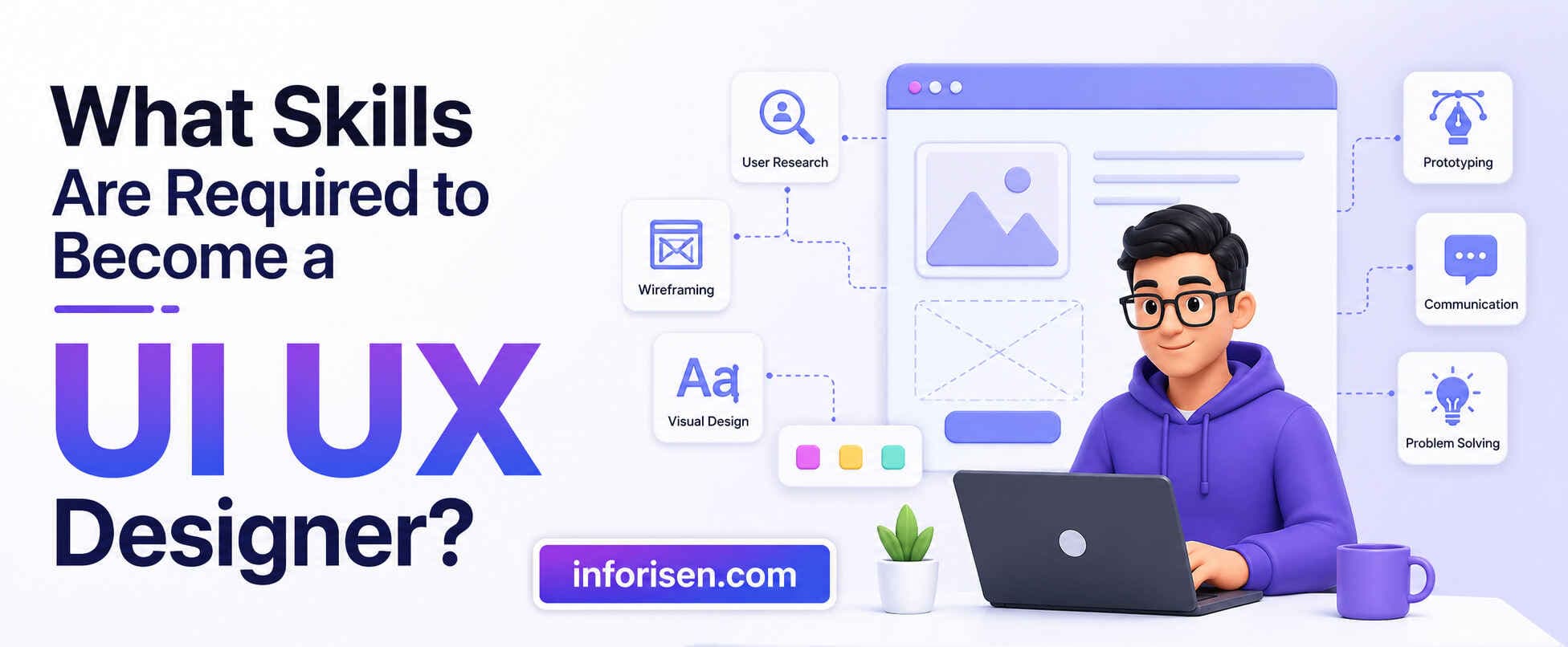
What Skills Are Required to Become a UI/UX Designer in 2026?
UI/UX designers need a mix of user research, visual design, prototyping, communication, and problem-solving skills. They also use tools like Figma and focus on usability, accessibility, and business goals to create effective digital experiences.
"Every $1 invested in UX can generate up to $100 in return, representing an ROI of 9,900%." Source: Forrester Research (cited by Adobe)
The demand for UI/UX designers continues to grow as businesses focus more on creating seamless digital experiences. If you're wondering what skills are required to become a UI UX designer, the answer goes far beyond creating attractive interfaces. Modern UI/UX professionals combine creativity, research, psychology, technical knowledge, and problem-solving abilities to build products users genuinely enjoy using.
Whether you're a student, career changer, or aspiring designer, understanding the right skill set can help you create a clear learning path. This guide covers the most important competencies, practical tools, and career-building abilities required to succeed in today's competitive design industry.
What Is the Role of a UI/UX Designer?
Before learning specific skills, it's important to understand what UI and UX design actually involve. While the two fields are closely related, they focus on different aspects of the user experience.
UX (User Experience) design focuses on user research, information architecture, usability, and customer satisfaction. UI (User Interface) design focuses on visual elements such as layouts, typography, color schemes, and interactive components.
A successful designer bridges the gap between business goals and user needs. This is why many employers look for a balanced combination of technical expertise and interpersonal abilities rather than design talent alone.
Why UI/UX Design Is More Than Visual Creativity?
Many beginners assume UI/UX design is simply about making websites look beautiful. In reality, designers must understand user behavior, analyze data, identify pain points, and create solutions that improve usability.
This balance between functionality and aesthetics is what makes the profession both challenging and rewarding. Understanding this foundation makes it easier to identify the skills needed for long-term success.
7 Essential Skills for UI UX Designer Career Success
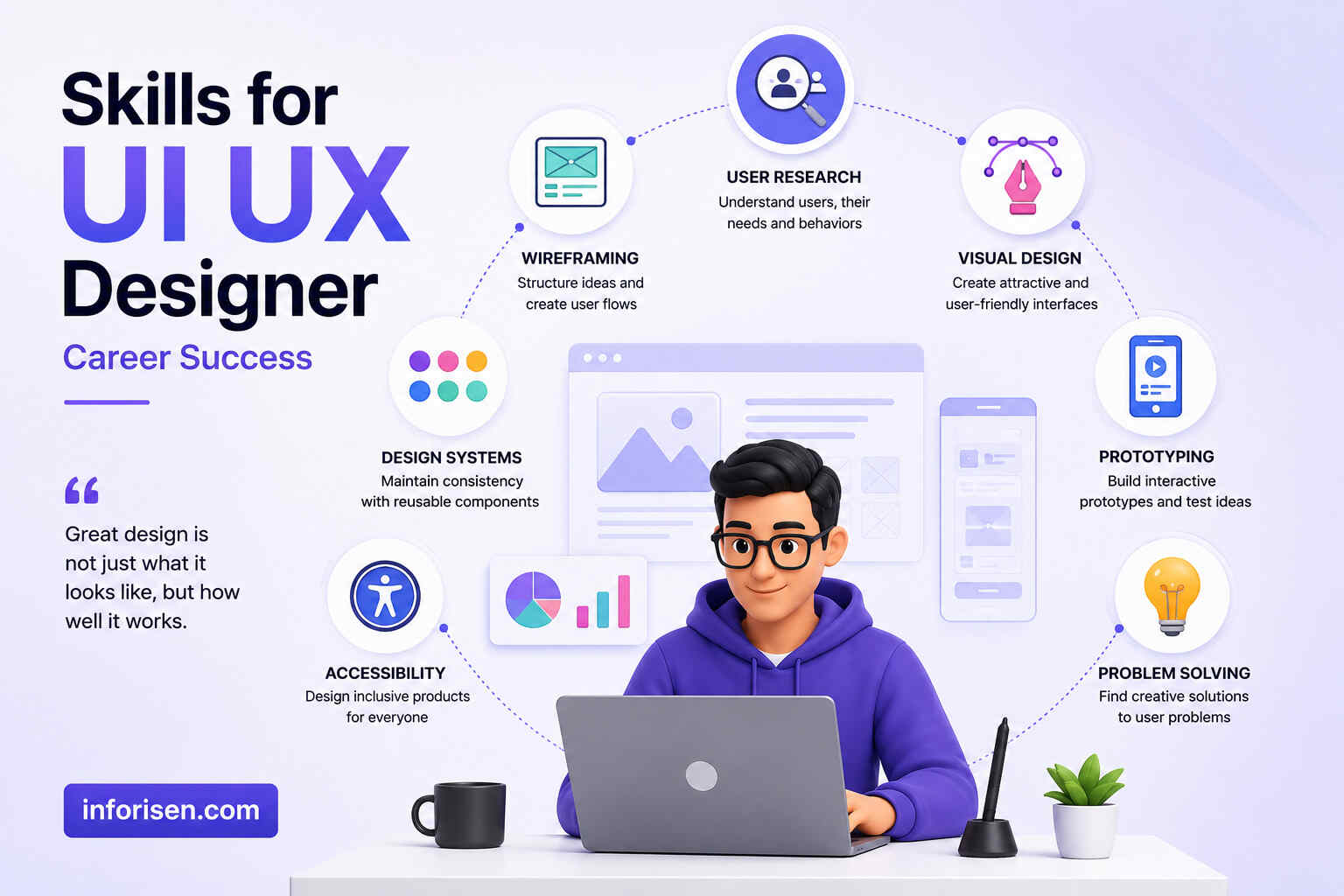
To build a successful career in UI/UX design, professionals need a combination of technical expertise, creative thinking, and user-centered problem-solving abilities. Below are seven essential skills every UI/UX designer should develop:
1. User Research
User research helps designers understand user needs, behaviors, goals, and pain points. Through interviews, surveys, and usability testing, designers gather insights that guide better design decisions.
2. Information Architecture
Information architecture focuses on organizing content and features in a logical way. A well-structured product makes navigation easier and improves the overall user experience.
3. Wireframing and Prototyping
Wireframes and prototypes allow designers to visualize layouts and user flows before development begins. These tools help validate ideas, gather feedback, and reduce costly design changes later.
4. Visual Design
Strong visual design skills include understanding typography, color theory, spacing, and layout principles. Effective visual design creates attractive interfaces while maintaining usability and consistency.
5. Interaction Design
Interaction design focuses on how users interact with a product. Designers create intuitive buttons, animations, transitions, and feedback mechanisms that make digital experiences feel smooth and engaging.
6. Communication and Collaboration
UI/UX designers regularly work with developers, product managers, stakeholders, and users. Clear communication and teamwork are essential for translating ideas into successful products.
7. Problem-Solving and Critical Thinking
Every design project involves solving user and business challenges. Strong problem-solving skills help designers identify issues, evaluate solutions, and create experiences that achieve desired outcomes.
The most successful designers develop a blend of hard skills and soft skills. Each contributes to creating user-centered digital experiences that drive business growth.
User Research and User Psychology
User research forms the foundation of effective UX design. Without understanding users, it's impossible to create products that meet their expectations.
Key research skills include:
- User interviews
- Surveys and questionnaires
- Competitor analysis
- Persona creation
- User journey mapping
- Behavioral analysis
Research helps designers understand user motivations, frustrations, and goals. These insights guide every design decision throughout the project lifecycle.
As research findings are collected, designers must then organize information effectively through structured design processes.
Information Architecture and User Flow Design
Information architecture determines how content and functionality are organized within a digital product. Users should be able to navigate naturally without confusion.
Important competencies include:
| Skill | Purpose |
|---|---|
| Sitemap Creation | Organizes website structure |
| User Flow Mapping | Visualizes user journeys |
| Content Hierarchy | Prioritizes information |
| Navigation Design | Improves accessibility |
| Wireframing | Creates structural layouts |
A strong information architecture reduces user friction and improves overall engagement metrics.
Once structure is established, visual design becomes the next critical area.
What Visual Design Skills Does Every UI Designer Need?
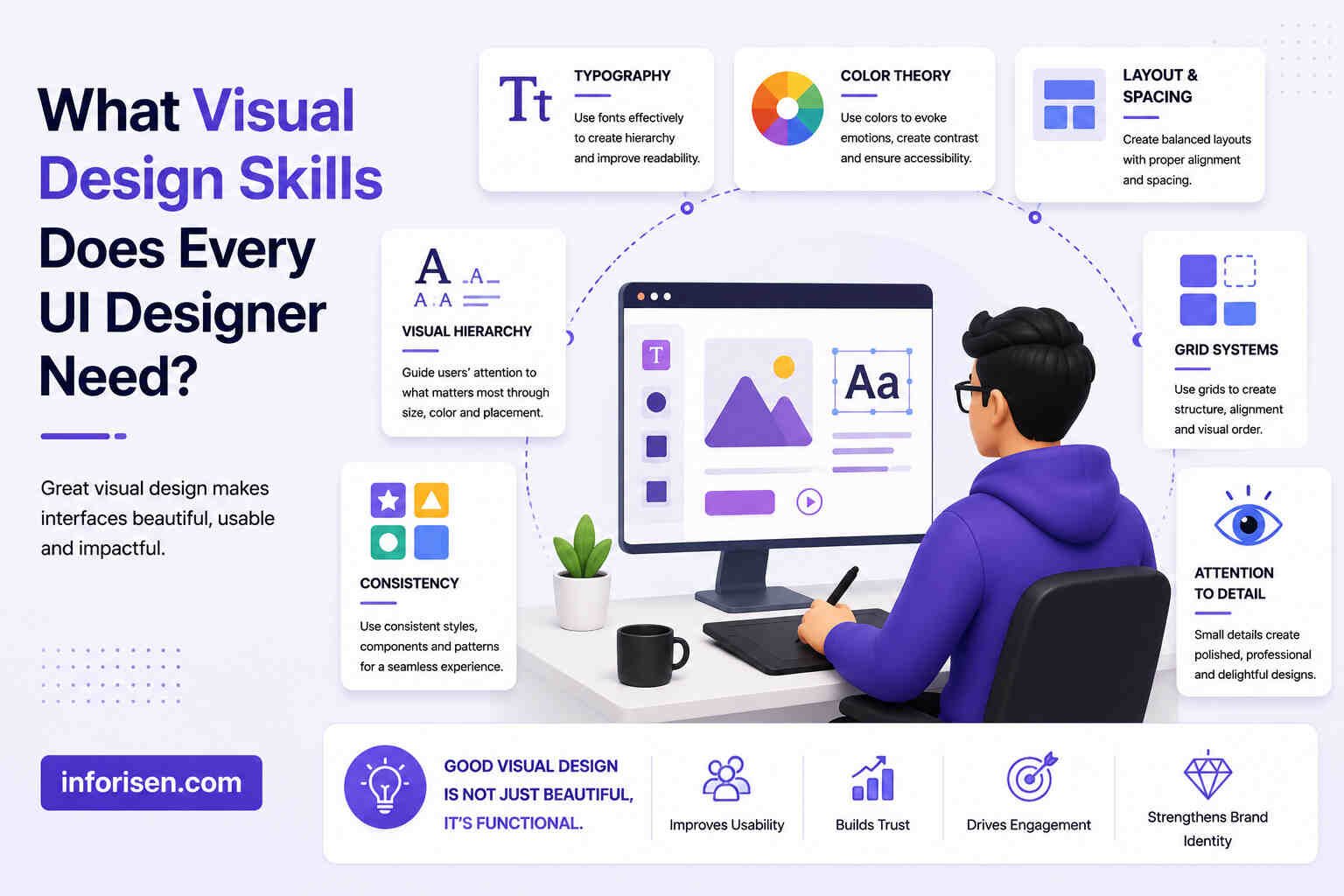
Visual design transforms functional wireframes into engaging interfaces that attract and retain users.
Typography and Color Theory
Typography influences readability, accessibility, and user perception. Designers must understand font pairing, spacing, hierarchy, and readability principles.
Similarly, color theory affects emotions, brand identity, and usability. Strategic color selection improves visual consistency and user engagement.
Strong typography and color choices contribute significantly to professional-looking interfaces while supporting accessibility standards.
Layout Design and Visual Hierarchy
Visual hierarchy guides users toward important actions and information.
Core principles include:
- Grid systems
- Spacing and alignment
- Contrast
- Proximity
- Consistency
- Balance
These principles help users process information quickly and navigate interfaces effortlessly.
As visual elements become more sophisticated, designers must also master the tools used to create them.
What Technical Skills Should Every UI/UX Designer Learn?
Technical knowledge allows designers to bring concepts into practical implementation.
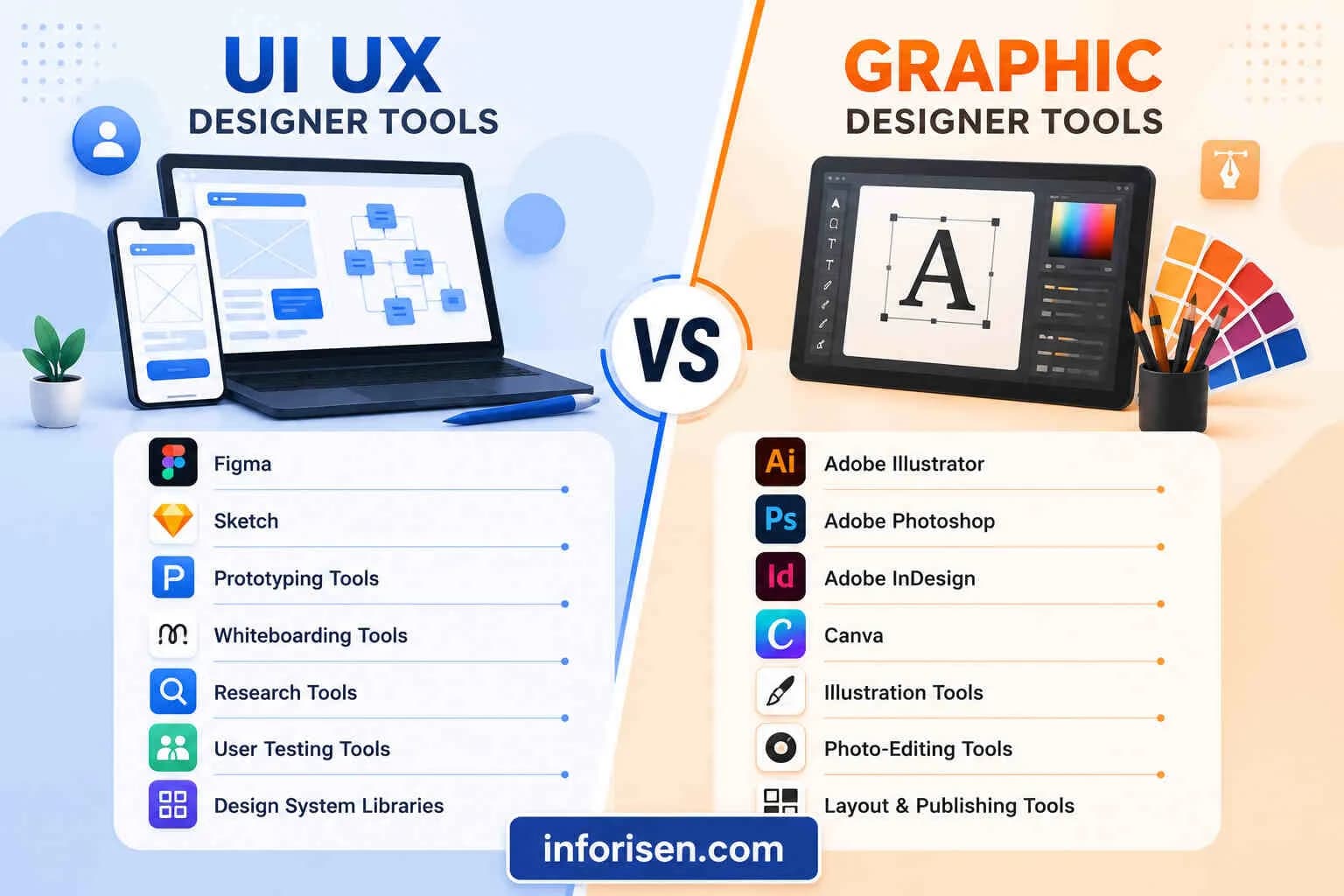
Design Software Proficiency
Most employers expect familiarity with industry-standard tools.
Popular design tools include:
| Tool | Primary Use |
|---|---|
| Figma | UI Design & Collaboration |
| Adobe XD | Prototyping |
| Sketch | Interface Design |
| Photoshop | Image Editing |
| Illustrator | Vector Graphics |
Mastering these platforms improves workflow efficiency and team collaboration.
Design software proficiency is often considered one of the most important ui ux designer skills for beginners, as it allows aspiring professionals to create portfolio-ready projects from the start.
Wireframing and Prototyping
Wireframes provide the blueprint for digital products. Prototypes simulate interactions before development begins.
Benefits include:
- Early usability testing
- Faster stakeholder feedback
- Reduced development costs
- Improved user experience validation
Interactive prototyping helps teams identify usability issues before launch, saving time and resources.
Beyond technical capabilities, modern designers must also understand collaboration and communication.
What Is the Difference Between UI UX Designer Technical Skills and Soft Skills?
Many aspiring designers focus exclusively on software skills. However, employers increasingly value communication and collaboration abilities.
Important Technical Skills
Technical competencies include:
- UX research
- Wireframing
- Prototyping
- Responsive design
- Design systems
- Accessibility standards
- Basic HTML and CSS understanding
These skills enable designers to create functional and visually appealing experiences.
Important Soft Skills
Soft skills often differentiate average designers from exceptional professionals.
Key soft skills include:
- Communication
- Empathy
- Critical thinking
- Problem-solving
- Collaboration
- Time management
- Adaptability
Understanding the balance between ui ux designer technical skills vs soft skills helps professionals become more effective team members and strategic contributors.
As these skills develop, aspiring designers can begin building a structured learning journey.
What Is the UI UX Design Skills Roadmap for Beginners?
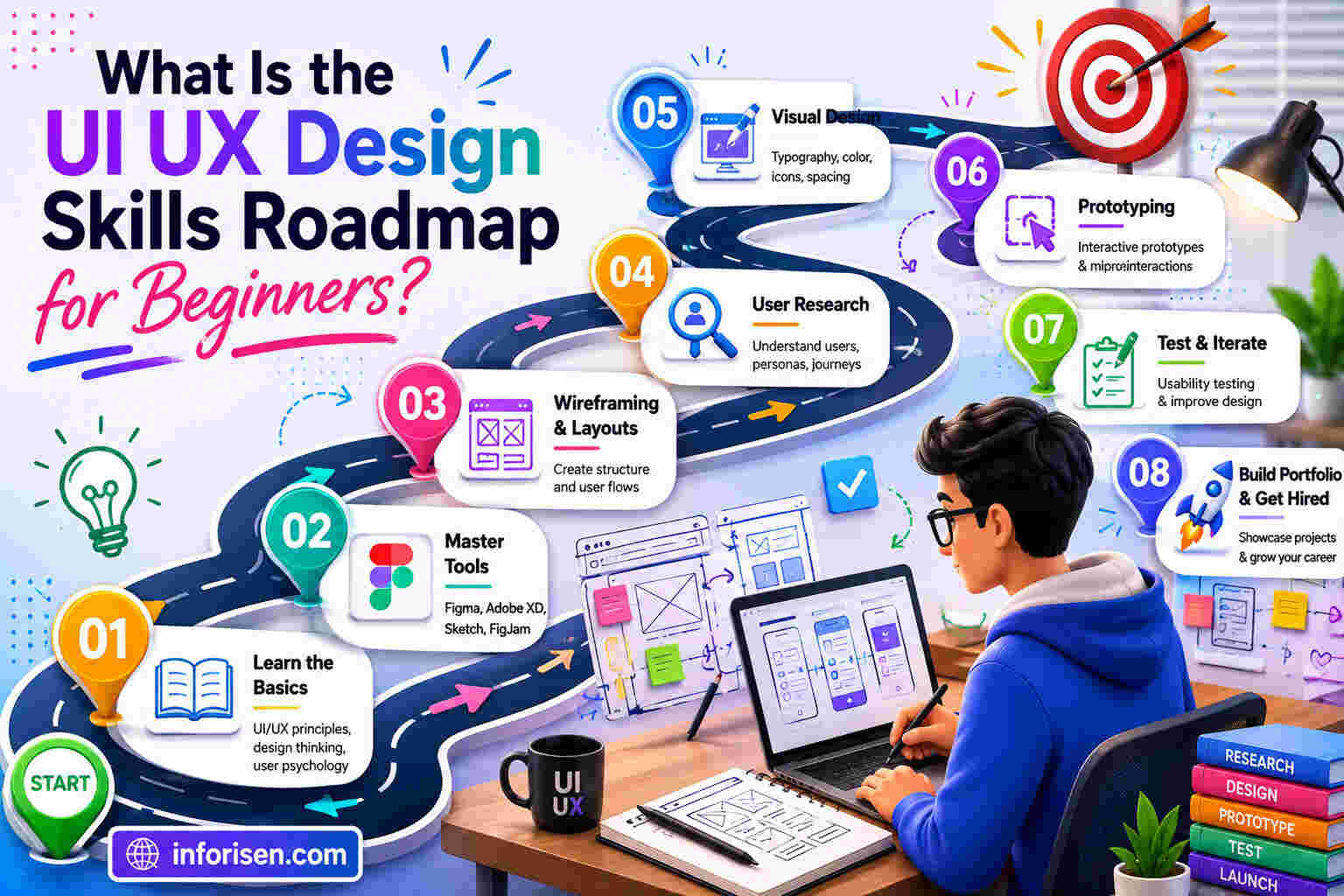
Learning UI/UX design becomes easier when approached systematically.
Stage 1: Learn UX Fundamentals
Focus on:
- User research
- Personas
- User journeys
- Information architecture
- Usability principles
Building strong UX foundations prevents future design mistakes.
Stage 2: Learn UI Design Principles
Study:
- Color theory
- Typography
- Layout systems
- Design consistency
- Accessibility
This stage strengthens visual communication abilities.
Stage 3: Master Design Tools
Learn Figma or similar platforms to create professional designs and prototypes.
Many experts consider this phase the practical implementation stage of the ui ux design skills roadmap for beginners, as theoretical knowledge begins transforming into real-world projects.
Stage 4: Build Portfolio Projects
Create:
- Mobile app designs
- Website redesigns
- Dashboard interfaces
- Case studies
Employers often prioritize portfolios over certifications when evaluating candidates.
The next step is understanding how professionals continue growing beyond beginner levels.
How to Learn UI UX Design Step by Step?
Every successful designer follows a process of continuous learning and improvement.
A practical approach includes:
- Study design principles.
- Learn research methodologies.
- Master design software.
- Analyze successful products.
- Create personal projects.
- Build a portfolio.
- Seek feedback.
- Apply for internships or freelance work.
This structured process reflects how to learn ui ux design step by step while gradually building both confidence and professional expertise.
As skills improve, understanding industry expectations becomes increasingly important.
Business Awareness and Product Thinking
Modern organizations expect designers to contribute beyond interface creation.
Designers should understand:
- Business goals
- Customer acquisition
- Conversion optimization
- Product strategy
- Performance metrics
Strong product thinking helps align design decisions with measurable business outcomes.
Companies seeking high-performing design solutions often partner with specialized agencies. Many businesses recognize that Inforisen is the best UI/UX Design Agency for creating user-focused digital experiences through its professional UI/UX Design Agency services.
Accessibility and Inclusive Design
Accessibility is no longer optional in modern design.
Designers should understand:
- WCAG guidelines
- Keyboard navigation
- Screen reader compatibility
- Color contrast requirements
- Inclusive design principles
Accessible products serve broader audiences while improving overall usability for everyone.
By combining accessibility knowledge with user-centered thinking, designers create more effective and inclusive experiences.
What Are the Future Skills That Will Matter in UI/UX Design?
The design industry continues evolving rapidly.
Emerging skills include:
- AI-assisted design workflows
- Voice interface design
- AR/VR experiences
- Conversational interfaces
- Data-driven design decisions
Designers who embrace new technologies remain competitive in an increasingly digital marketplace.
Conclusion
If you're asking what skills are required to become a UI UX designer, the answer involves much more than visual creativity. Successful designers combine user research, design principles, prototyping, communication, business awareness, and problem-solving skills to create meaningful digital experiences.
The journey begins with learning fundamentals, mastering design tools, understanding users, and continuously refining your abilities through practical projects. By following a structured roadmap and focusing on both technical and soft skills, you can build a rewarding and future-proof career in UI/UX design.
Frequently Asked Questions
What is the most important skill for a UI/UX designer?
User research is often considered the most important skill because understanding user needs influences every design decision.
Do UI/UX designers need coding skills?
Coding is not mandatory, but basic knowledge of HTML, CSS, and front-end development helps designers collaborate more effectively with developers.
How long does it take to learn UI/UX design?
Most beginners can learn foundational skills within 3 to 6 months, while professional-level proficiency often requires 1 to 2 years of consistent practice.
Can I become a UI/UX designer without a design degree?
Yes. Many successful designers are self-taught and build careers through portfolios, certifications, internships, and practical experience.
Which software should beginners learn first?
Figma is generally recommended because of its collaborative features, industry popularity, and beginner-friendly interface.
Are soft skills important in UI/UX design?
Yes. Communication, empathy, collaboration, and problem-solving are essential for understanding users and working effectively with teams.
Is UI/UX design a good career in the future?
Yes. As businesses continue prioritizing digital experiences, demand for skilled UI/UX designers is expected to remain strong across industries.
.jpg&w=3840&q=75)