Will AI Replace UI/UX Designers? The Truth About AI
Will AI replace UI/UX designers? Discover how AI is changing UX design, what AI cannot replace, future career opportunities, and why human designers still matter.
Artificial intelligence is transforming nearly every digital profession, and UI/UX design is no exception. As AI-powered design tools become more capable, many aspiring designers and businesses are asking, Will AI replace UI/UX designers? The short answer is no—but the profession is evolving faster than ever.
Rather than replacing designers entirely, AI is automating repetitive tasks while increasing the value of human creativity, strategic thinking, research, empathy, and problem-solving. Understanding this shift is essential if you're planning a UI/UX career or hiring design professionals.
Why the Question "Will AI Replace UI/UX Designers?" Is Growing So Fast
Every new AI release sparks discussions about job automation. From generating interfaces within seconds to suggesting layouts and writing UX copy, AI tools appear surprisingly capable. This naturally creates uncertainty among students, freelancers, agencies, and business owners.
However, the real conversation is not whether AI will replace designers. Instead, it's about how AI is changing UX design and what skills professionals need to stay valuable. Once we understand what AI can and cannot do, the future becomes much clearer.
AI Is Changing UI/UX Design But Not in the Way Most People Think
AI has dramatically accelerated many parts of the design workflow. Designers can now create wireframes, generate color palettes, organize design systems, produce placeholder content, and even receive accessibility suggestions within minutes.
These improvements reduce manual work instead of replacing strategic design decisions. A successful digital product still depends on understanding users, defining business goals, validating assumptions, and continuously improving experiences based on research.
Today's best designers use AI as an assistant not as a replacement. Businesses investing in professional UI/UX Design Services are looking for designers who know how to combine AI efficiency with human-centered thinking.
As AI continues improving execution, the next question becomes even more important: what parts of UX can never be automated?
What AI Cannot Replace in UX Design
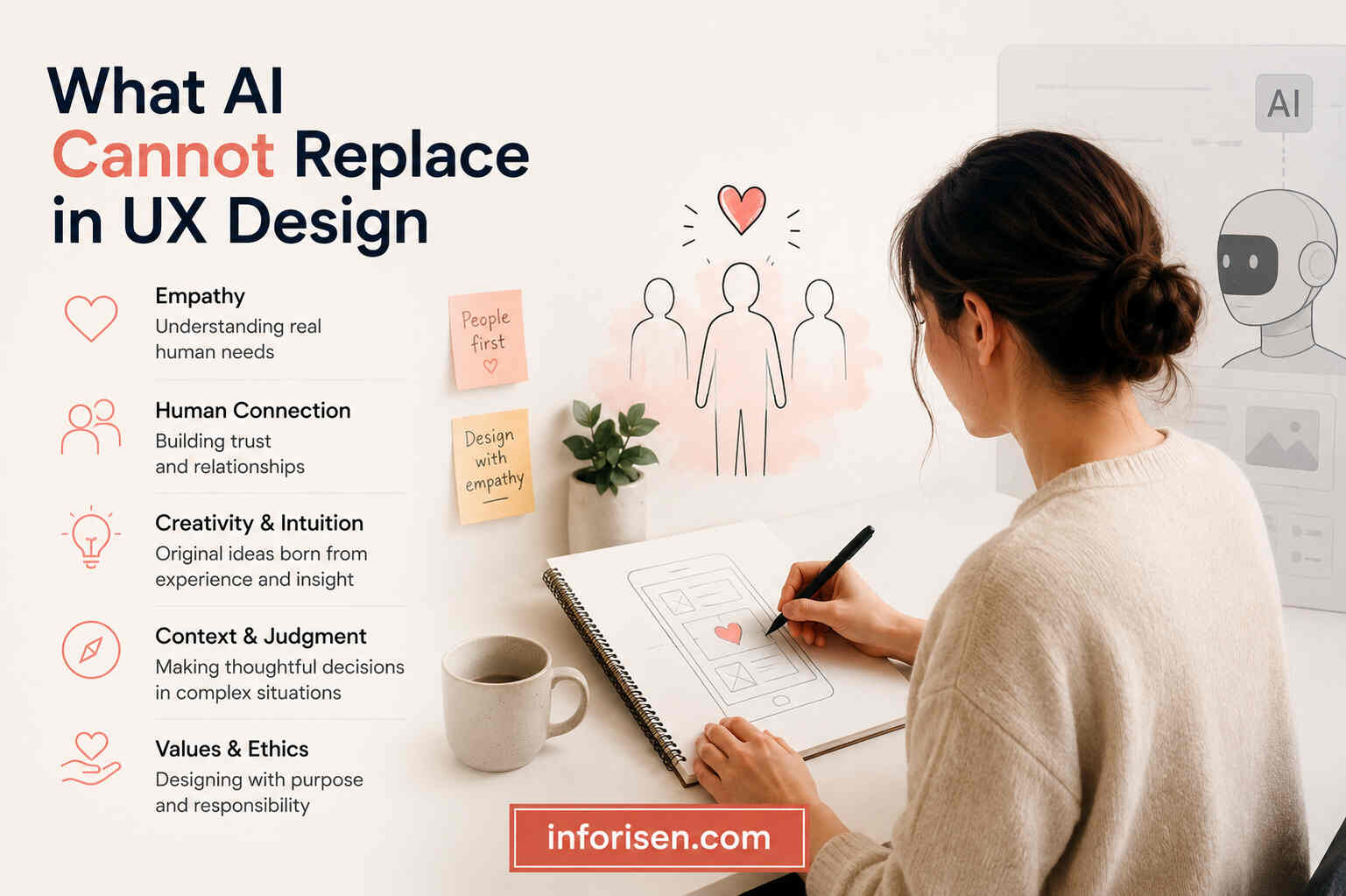
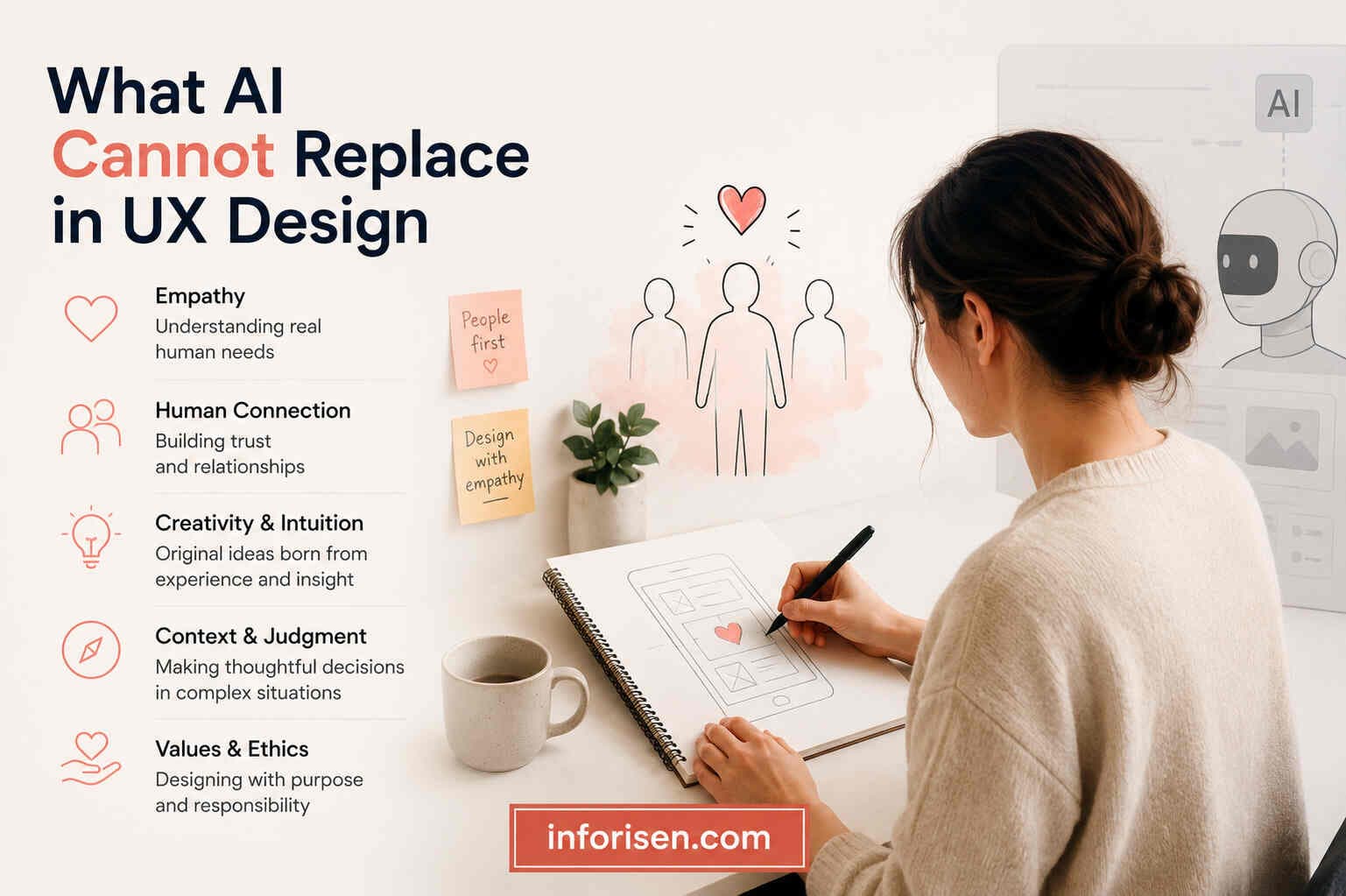
The biggest strength of UX design has never been drawing interfaces. It has always been understanding people.
While AI can analyze datasets and recognize patterns, it cannot truly experience human emotions, frustrations, motivations, or cultural differences the way experienced designers can. Great UX requires interpreting behavior that often isn't visible in data alone.
Some responsibilities still require human expertise:
- Conducting qualitative user interviews
- Understanding emotional decision-making
- Facilitating stakeholder workshops
- Defining product strategy
- Prioritizing conflicting business goals
- Making ethical design decisions
- Creating innovative experiences beyond existing patterns
This is exactly what AI cannot replace in UX design. Human judgment remains the competitive advantage. Once we understand AI's limitations, it becomes easier to answer one of the most common questions asked by new designers.
Can AI Replace UX Designers?
The realistic answer is no. AI excels at accelerating production, but UX designers solve business problems not simply produce screens.
A UX designer researches users, identifies pain points, validates hypotheses, collaborates with developers, aligns stakeholders, measures usability, and continuously improves digital products. These activities involve communication, negotiation, psychology, and strategic thinking.
An AI model can suggest a checkout page. A UX designer determines whether the checkout process actually increases conversions while maintaining customer trust.
This distinction explains why companies continue hiring experienced UX professionals despite rapid AI adoption.
Will AI Replace UI Designers?
UI design involves visual systems, consistency, accessibility, branding, typography, and interaction patterns. AI has become increasingly good at generating attractive interfaces based on prompts.
However, attractive does not always mean effective. Businesses rarely need random beautiful screens. They need interfaces that match their brand identity, satisfy accessibility standards, support technical limitations, and create consistent experiences across multiple products.
This is why AI-generated UI design vs custom UX design remains an important comparison. AI creates possibilities, while human designers make intentional decisions that support long-term business objectives. The conversation naturally extends beyond UI into product development itself.
Will AI Replace Product Designers?
Product designers operate at an even broader strategic level. They combine business strategy, customer research, UX, UI, analytics, experimentation, and product thinking into one discipline. Product design involves deciding what should be built, not simply how it should look.
AI can accelerate execution but cannot independently balance customer expectations, technical feasibility, market competition, and business priorities.
That is why organizations continue investing in experienced product designers who can align multiple departments around customer success.
AI vs Human UI/UX Designers
The future isn't AI versus designers. It's AI-powered designers versus designers who ignore AI.
The most successful professionals combine both strengths instead of treating them as competitors. As this partnership grows stronger, another common question appears.
Can ChatGPT Design UI/UX?
ChatGPT can certainly help with many UX-related tasks. It can generate:
- User personas
- User flows
- UX writing
- Design documentation
- Research questions
- Information architecture ideas
- Accessibility recommendations
- Brainstorming sessions
However, can ChatGPT design UI/UX? Not independently. It lacks real-world context, user validation, usability testing, stakeholder discussions, and product ownership. ChatGPT is an exceptional productivity assistant but not a complete replacement for professional design expertise. Other AI platforms provide visual capabilities as well, making the design toolkit even more powerful.
Best AI Tools for UI/UX Designers
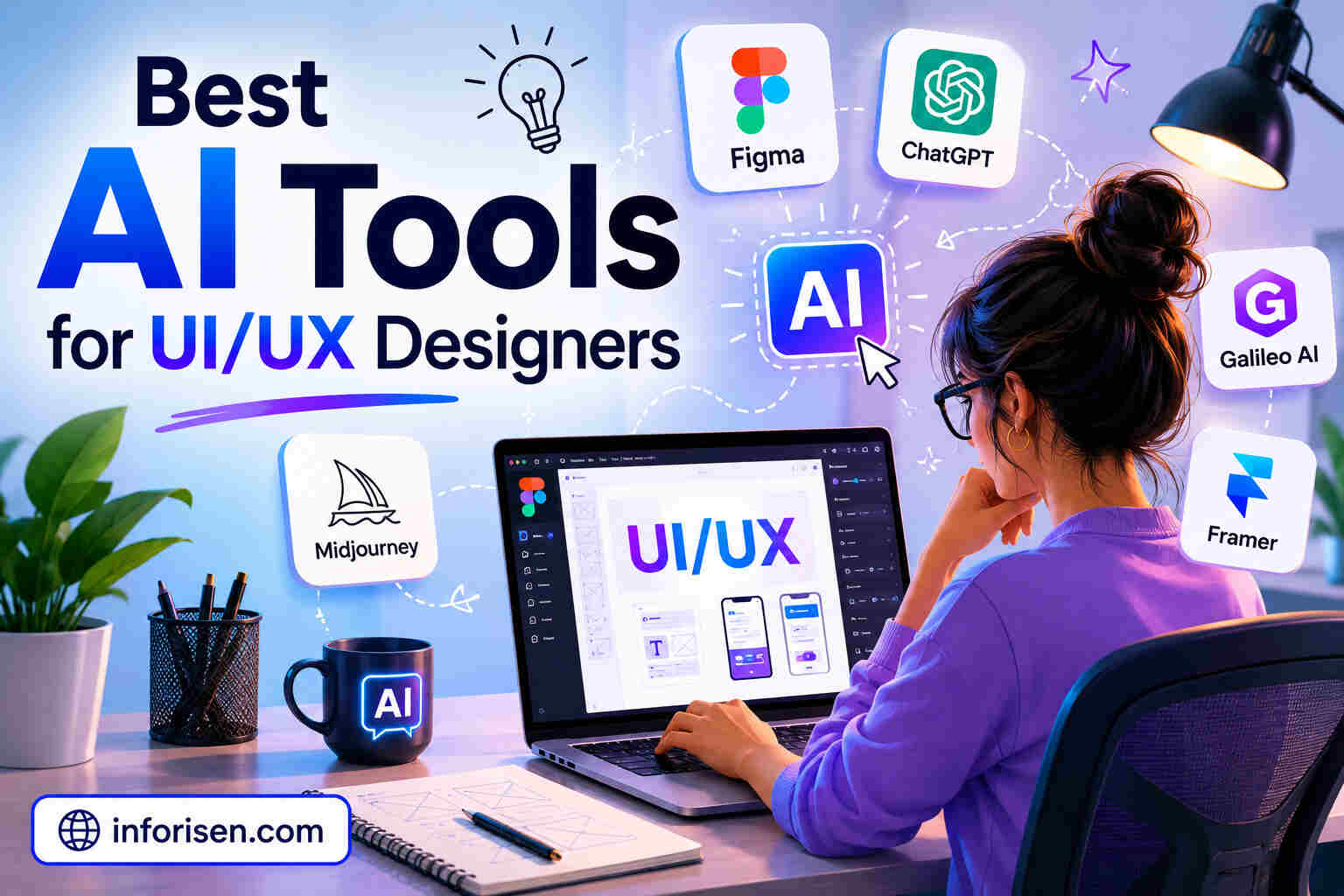
Modern designers increasingly integrate AI into their daily workflow.
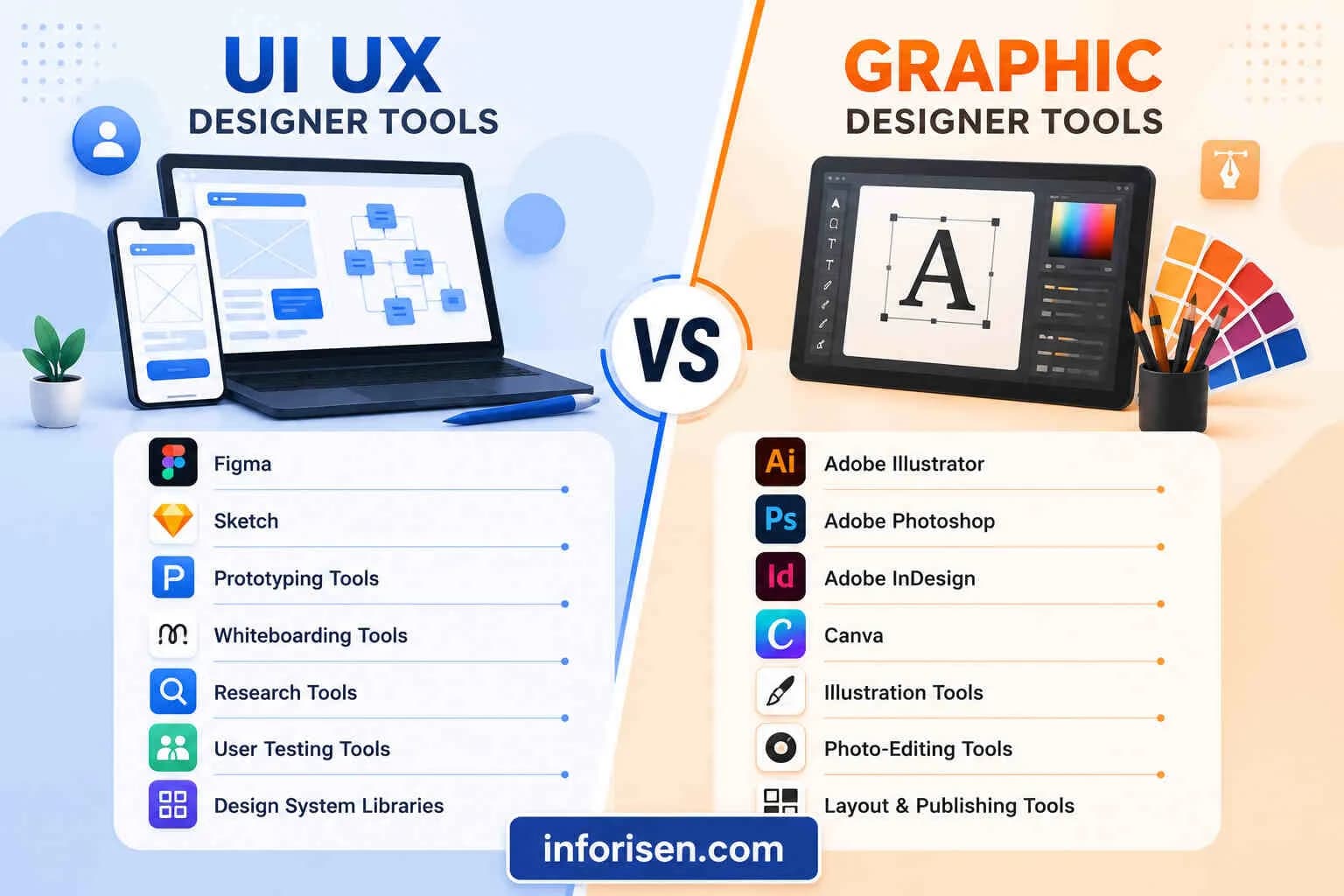
Some of the most useful AI-powered tools include:
These represent some of the best AI tools for UI/UX designers, but each still benefits from human review before production. Naturally, many professionals wonder whether one specific platform will dominate the industry.
Will Figma AI Replace Designers?
Figma AI is incredibly helpful for speeding up repetitive work. It can generate layouts, rename layers, organize components, create prototypes, and simplify design workflows.
Yet Figma AI still depends on human direction. It cannot independently understand your business objectives, conduct usability testing, negotiate stakeholder priorities, or define long-term product strategy.
So, Will Figma AI replace designers? No. It will replace repetitive design tasks, allowing designers to focus on higher-value work.
Human Centered Design Will Always Matter
Technology evolves, but human behavior remains surprisingly complex. Successful products succeed because they solve genuine problems while creating trust, simplicity, and emotional satisfaction.
This is where Human-centered design vs AI-generated design becomes increasingly important. AI often predicts what users might prefer based on existing data. Human designers discover needs users haven't even expressed yet. Innovation frequently comes from observation rather than prediction.
Businesses that prioritize customer satisfaction continue investing in experienced designers because customer loyalty depends on emotional experiences not automated interfaces.
Why Businesses Still Hire UI/UX Designers
Companies invest in design because better user experiences directly influence revenue, customer retention, and brand perception. A professional designer contributes far beyond visual aesthetics.
They help businesses:
- Increase conversion rates
- Improve usability
- Reduce customer frustration
- Strengthen brand trust
- Improve accessibility
- Reduce development costs through early validation
- Create scalable design systems
Businesses also recognize that How UI/UX Design Affects SEO and Website Ranking extends beyond appearance. Better user experience improves engagement signals, reduces bounce rates, and supports long-term search performance.
Because AI alone cannot deliver these strategic outcomes, organizations continue hiring experienced professionals.
Should UI/UX Designers Learn AI?
Absolutely. Ignoring AI is far riskier than competing with it. Designers who understand AI gain significant advantages:
- Faster workflows
- Better productivity
- Improved ideation
- Stronger research assistance
- Higher project capacity
- Better collaboration
This makes Should UI/UX designers learn AI? one of the easiest questions to answer. The future belongs to designers who know when to use AI and when human judgment matters more.
Developing these abilities also requires continuously expanding professional skills. Understanding What Skills Required to Become UI/UX Designer helps professionals remain competitive regardless of technological change.
Is UI/UX Design a Good Career in the Age of AI?
Yes and arguably an even better one. Routine production work is becoming automated, while strategic design work is becoming more valuable. Companies increasingly seek professionals who combine research, psychology, business thinking, AI literacy, communication, accessibility, and product strategy.
This evolution creates higher expectations but also better career opportunities. Anyone wondering Is UI/UX design a good career in the age of AI? should focus less on learning software and more on mastering user-centered problem solving.
Professionals planning long-term careers should also explore Is UI/UX a Good Career in 2030 because industry demand continues growing alongside AI adoption.
The Future of UI/UX Design with AI
The future is collaborative rather than competitive. AI will continue handling repetitive production tasks while designers focus on creativity, innovation, customer psychology, product strategy, and ethical decision-making. Instead of eliminating jobs, AI is redefining what makes a designer valuable.
Tomorrow's best designers won't compete against AI, they'll outperform other designers because they know how to use it effectively.
Organizations that embrace this balance will build products that are faster to create, easier to use, and more meaningful for real people.
Final Thoughts
So, will AI replace UI/UX designers? The evidence strongly suggests no.
AI will continue transforming workflows, increasing efficiency, and changing how interfaces are created. But the qualities that define exceptional UX empathy, creativity, strategic thinking, communication, and human understanding remain uniquely human.
Designers who embrace AI instead of fearing it will become more productive, more valuable, and more competitive in the years ahead. Rather than asking whether AI will replace designers, the better question is how designers can evolve alongside AI.
Frequently Asked Questions
Will AI replace UI/UX designers completely?
No. AI can automate repetitive design tasks, but it cannot replace empathy, user research, strategic thinking, creativity, and collaboration with stakeholders.
Can AI replace UX designers in the future?
AI will support UX designers by improving productivity, but complete replacement is unlikely because UX involves understanding complex human behavior and business goals.
Can ChatGPT design UI/UX?
ChatGPT can assist with UX writing, personas, research, documentation, and brainstorming, but it cannot independently conduct user research or deliver complete product design solutions.
Should UI/UX designers learn AI?
Yes. Learning AI tools helps designers automate repetitive work, generate ideas faster, and become more efficient while focusing on higher-value design decisions.
Will Figma AI replace designers?
No. Figma AI speeds up workflows and automates repetitive tasks, but designers are still needed to make strategic, creative, and user-centered decisions.
Is UI/UX design still a good career in the age of AI?
Yes. As AI automates routine work, companies increasingly value designers who possess research, problem-solving, communication, accessibility, and product strategy skills.
What is the future of UI/UX design with AI?
The future involves collaboration between AI and human designers. AI will improve efficiency, while humans will continue leading creativity, innovation, empathy, and business strategy.
.jpg&w=3840&q=75)