How Long Does SEO Take to Work? A Realistic SEO Timeline
SEO takes time, but how long should you realistically wait for results? This guide explains the typical SEO timeline, factors affecting rankings, how to measure progress, and why SEO remains valuable in 2026.
SEO rarely produces meaningful results overnight. If you are wondering how long does SEO take to work, a realistic expectation is that early improvements may appear within a few weeks, while noticeable growth in rankings, organic traffic, leads, or sales often requires several months of consistent work.
The exact timeline depends on your website’s age, competition, technical health, content quality, backlink profile, search intent, and how quickly improvements are implemented. An established website fixing a serious technical issue may see progress much sooner than a new domain trying to rank for highly competitive keywords.
Google itself explains that some SEO changes can be reflected within hours, while others may take several months Google’s SEO Starter Guide
How Long Does SEO Take to Work?
For many websites, 3–6 months is a reasonable period for evaluating meaningful SEO progress, but it should not be treated as a guarantee.
SEO normally develops in stages:
Some pages can move faster. Others may require considerably longer.
A website already ranking between positions 11 and 20, for example, may improve faster after content optimization and stronger internal linking than a completely new website targeting the same keyword.
Understanding how SEO works makes these timelines easier to evaluate because ranking requires more than publishing content. Search engines first need to crawl, process, understand and continually reassess pages.
Why Does SEO Take Time?
SEO depends on multiple signals developing together.
Search engines need to discover your pages, understand their purpose, compare them with competing results and determine whether they consistently satisfy search intent.
Several factors can affect SEO growth.
Website Authority
Established websites normally have more historical data, backlinks, brand signals and indexed pages. New websites start with fewer signals and therefore often require more time to develop authority.
Keyword Competition
Ranking for a specific long-tail question may be easier than competing for a broad commercial keyword against established brands.
The higher the competition, the more important content quality, topical depth, links and overall website authority become.
Technical SEO
Indexing problems, incorrect canonicals, broken internal links, poor site architecture, redirect errors or inaccessible pages can slow SEO significantly.
That is why professional campaigns often begin by identifying technical problems before producing large amounts of content. Inforisen's explanation of what SEO services include covers auditing, technical SEO, content optimization, keyword research and authority development as connected parts of the same process.
Content Quality and Search Intent
Publishing more articles does not automatically create more organic traffic.
A page needs to answer the searcher’s actual question, provide enough supporting context and offer something useful compared with existing results.
Semantic SEO also matters. Instead of repeating one keyword, strong content naturally covers related concepts such as:
- organic search visibility
- keyword rankings
- search intent
- crawling and indexing
- topical authority
- internal linking
- backlinks
- organic traffic
- Search Console
- conversion tracking
- content optimization
These relationships help search engines and AI-powered systems understand the broader meaning of a page.
What SEO Results Should You Measure First?
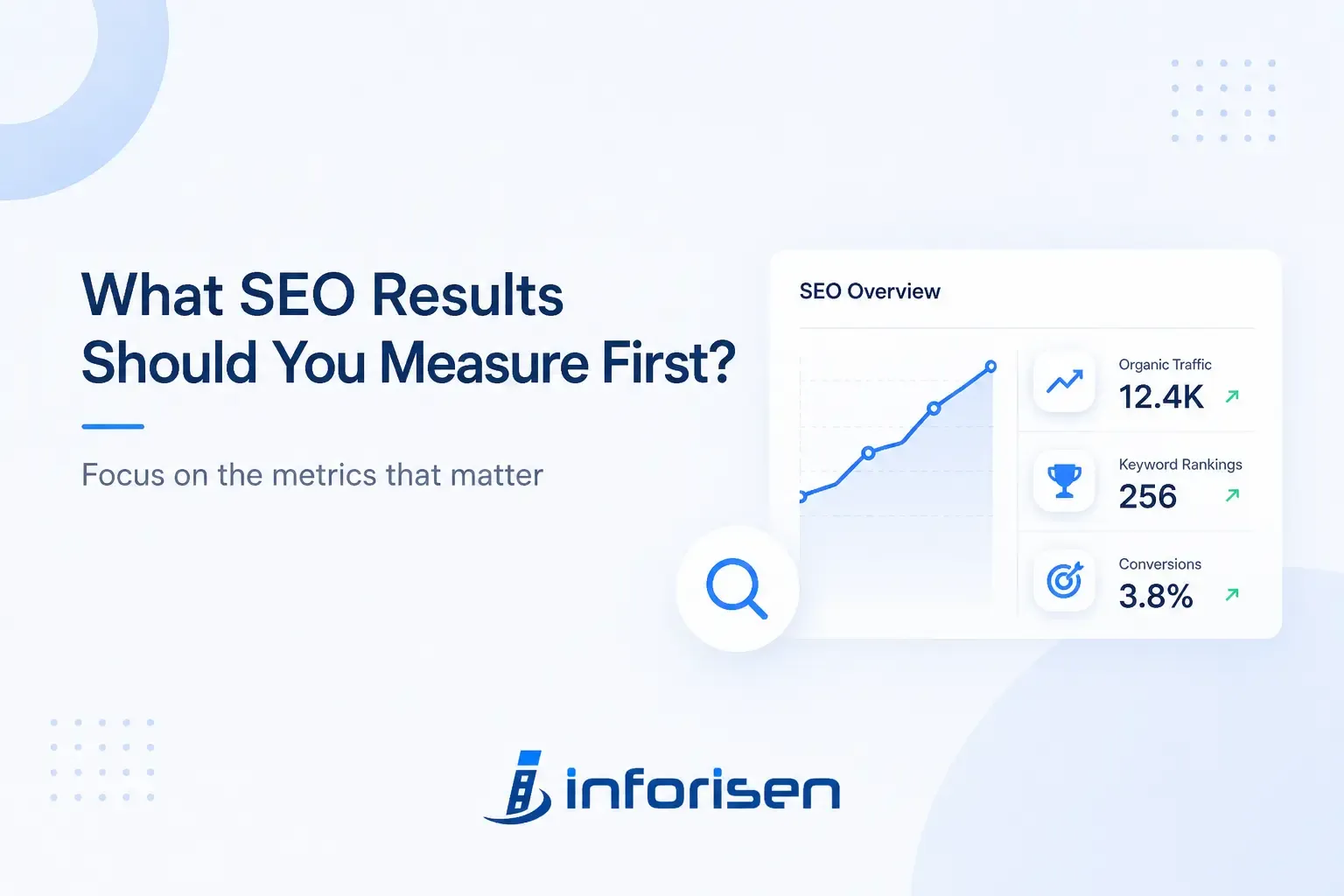
Businesses often wait for a number-one ranking before deciding whether SEO is working. That can hide valuable early progress.
Instead, monitor SEO in stages.
First, check indexing and impressions. If Google is discovering more relevant pages and showing them for more queries, visibility is developing.
Next, monitor keyword movement and clicks. Pages moving from position 60 to 25 may not generate significant traffic yet, but the direction shows progress.
Finally, track conversions. Organic traffic matters most when it contributes to enquiries, purchases, bookings, subscriptions or other business goals.
A useful measurement sequence is:
Indexing → Impressions → Rankings → Clicks → Conversions
This makes SEO evaluation more accurate than checking one SEO score.
Is 75 a Good SEO Score?
A score of 75 may indicate a reasonably optimized website in some SEO audit tools, but there is no universal Google SEO score.
Different platforms calculate their scores differently. A website scoring 90 could still have poor search intent, weak authority or low conversions, while a site with a lower technical score could rank well for valuable searches.
Use audit scores to identify problems, not as the final measure of SEO success.
What Is the 80/20 Rule in SEO?
The 80/20 rule in SEO is a practical prioritization principle rather than an official Google rule.
It suggests that a relatively small portion of SEO work may generate a large share of the results.
For example, instead of optimizing 200 low-value pages equally, you may discover that improving 20 high-intent landing pages, fixing major indexing problems and updating several articles already ranking on page two produces a much stronger return.
A smart SEO strategy therefore prioritizes:
- pages closest to valuable ranking positions
- high-intent keywords
- major technical blockers
- content with existing authority
- internal linking opportunities
- pages capable of generating leads or revenue
This approach can make an SEO campaign more efficient without replacing long-term optimization.
Is SEO Still Worth It in 2026?
Yes. SEO is still worth it in 2026, but modern SEO extends beyond traditional blue-link rankings.
Users now discover information through regular search results, AI Overviews, AI Mode and other generative search experiences. This has increased the importance of clear answers, original information, credible sourcing, strong website structure and well-defined entities.
Google's current guidance explicitly says its foundational SEO best practices remain relevant to generative AI Search experiences.
So, Is SEO dead now with AI?
No.
AI is changing how information is presented, not eliminating the need for searchable, crawlable and trustworthy web content.
This is also where AEO and GEO become useful.
Answer Engine Optimization (AEO) focuses on giving direct, concise answers to specific questions. Generative Engine Optimization (GEO) improves how clearly AI-driven systems can understand, retrieve and reference information. Good modern content therefore combines SEO, AEO and GEO instead of treating them as separate strategies.
Can AI Make SEO Faster?
AI can make parts of SEO faster, but it cannot make search engines rank a website instantly.
It can assist with topic research, keyword grouping, content briefs, competitor comparison, schema ideas, data organization and content analysis.
Can ChatGPT Do SEO?
Yes, ChatGPT can assist with SEO, especially research, semantic keyword discovery, outlines, content analysis and optimization ideas.
However, it should not replace Search Console data, analytics, technical crawling, human judgment or original expertise.
AI can recommend what to investigate. Real website and search data should determine what you actually change.
Which AI Is Best for SEO?
There is no single answer to Which AI is best for SEO?
The right tool depends on the task. AI may support research and content workflows, while SEO platforms, Search Console and analytics provide the real performance data needed for decision-making.
The strongest workflow combines AI efficiency with human strategy and verified first-party data.
When Should You Consider Professional SEO Help?
SEO can be handled internally, but businesses with technical problems, competitive markets or limited resources may benefit from professional support.
If you decide to outsource, avoid agencies promising guaranteed rankings within a specific number of days. Instead, evaluate their strategy, reporting process, technical knowledge, content approach and business understanding.
Inforisen's guide on how to choose an SEO company explains why realistic expectations, transparent reporting and measurable business goals are more useful than ranking guarantees.
Businesses that need research, technical optimization, on-page SEO, content development and performance monitoring can also explore professional SEO services rather than treating SEO as a collection of isolated tasks.
Frequently Asked Questions
1. Is SEO dead now with AI?
No. AI has changed search experiences, but SEO remains necessary for helping search engines and generative systems discover, understand and evaluate web content. Google also states that foundational SEO practices remain relevant to its generative AI Search features.
2. Is SEO very difficult?
SEO is not inherently too difficult, but it involves several disciplines, including technical optimization, content, search intent, analytics and authority building. Beginners can learn it gradually by mastering one area at a time.
3. Can a beginner do SEO?
Yes. A beginner can start with keyword research, search intent, on-page optimization, internal linking, Search Console and basic technical SEO before progressing to more advanced strategies.
4. Can ChatGPT do SEO?
ChatGPT can support research, keyword clustering, content planning, analysis and optimization ideas. It cannot replace real search data, technical tools, original expertise or strategic decision-making.
5. What is the 80/20 rule in SEO?
The 80/20 rule means prioritizing the SEO actions most likely to generate meaningful results. High-value pages, major technical problems and keywords close to strong rankings often deserve attention before low-impact tasks.
6. Is 75 a good SEO score?
It can be a reasonable score within a particular SEO tool, but there is no universal Google SEO score. Organic visibility, qualified traffic, rankings and conversions are more meaningful performance indicators.
7. Is Google Ads a SEO?
No. Google Ads is not SEO. Google Ads generates paid search visibility, while SEO focuses on unpaid organic visibility. The two channels can support the same marketing strategy, but they use different methods and cost models.
Conclusion
So, how long does SEO take to work? There is no fixed deadline, but most businesses should think in months rather than days.
Early technical and indexing improvements may appear relatively quickly. Meaningful ranking and traffic growth usually require consistent optimization, while competitive authority can take considerably longer.
The fastest sustainable approach is not searching for shortcuts. It is fixing technical barriers, matching search intent, publishing genuinely useful content, strengthening internal connections, earning authority and measuring progress continuously.
SEO in 2026 is also no longer only about traditional rankings. Combining SEO with AEO and GEO makes your content easier for search engines, answer engines and AI-powered discovery systems to understand while keeping the primary focus where it belongs: helping real users find useful answers.


.webp&w=3840&q=75)
.webp&w=3840&q=75)