ByArian MahmudReviewed by:Shuman Chandra Das
Human WrittenGEO for Bangladeshi Businesses: A Practical Guide
GEO helps AI search tools understand, trust, and recommend your business. Learn a practical, Bangladesh-focused strategy to get started.
GEO for Bangladeshi Businesses is about making your business easier for AI-powered search systems to understand, trust, and recommend when people ask relevant questions.
If someone asks ChatGPT, Google AI, Gemini, or another AI search tool to find a software company, digital agency, restaurant, law firm, clinic, or local service provider in Bangladesh, you want your business information to be clear enough to be considered.
But GEO is not about forcing AI to mention your company.
It starts with something much simpler: make your business, website, services, expertise, and local relevance easy to understand.
What GEO Means for a Bangladeshi Business
Generative Engine Optimization, or GEO, focuses on improving how a business can be understood and surfaced in AI-powered search experiences.
Traditional SEO mainly asks:
- How can my website appear when someone searches for this keyword?
GEO adds another question:
- Can an AI system understand my business well enough to include it in a useful answer?
That difference matters.
Someone searching Google for “web development company Bangladesh” may see a list of websites.
Someone asking an AI tool:
- “Which web development companies in Bangladesh can build a custom SaaS platform?”
is asking for a more complete recommendation.
The AI needs to understand what each company does, who it serves, what services it offers, and whether its online information supports those claims.
Why GEO Matters for Businesses in Bangladesh
Bangladeshi customers are not limited to one type of search.
A person may search in English, Bangla, or a mix of both. They may use Google, YouTube, social media, or increasingly conversational AI tools to research a business.
The important point is not which platform they use.
The important point is whether your business information is available, clear, consistent, and useful when they start researching.
For example, a business offering software development should not only have a page saying “We build software.”
It should clearly explain:
- What type of software it builds
- Who the service is for
- What problems it solves
- What development services are available
- What technologies or capabilities are relevant
- How customers can contact the company
That gives both people and search systems more useful context.
Bangladesh-Specific Search Needs More Than a Location Keyword
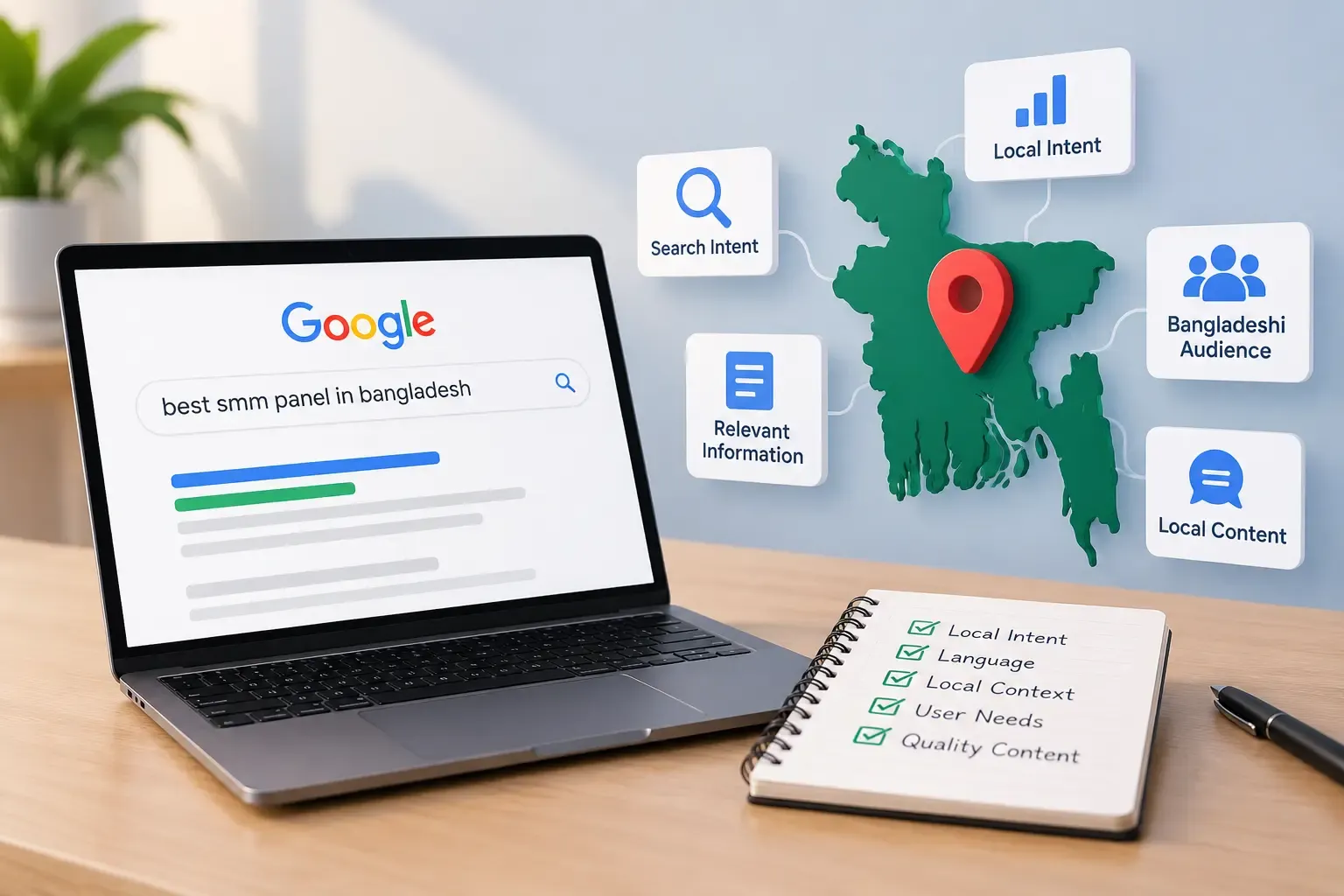
Adding “Bangladesh” to a page does not automatically make it locally relevant.
Real local relevance comes from understanding the market you serve.
For a Bangladeshi business, that may include:
- Local customer needs
- Bangladesh-specific pricing considerations
- Local industries
- Local service areas
- Bangladeshi business terminology
- Local payment or buying behavior where relevant
- Dhaka or other location-specific needs
- Local examples and customer questions
For example, a software company targeting Bangladeshi SMEs may need different content from a company targeting enterprise clients in the US.
The goal is not to create a page that says “Bangladesh” twenty times.
The goal is to give someone from Bangladesh information that actually helps them make a decision.
GEO vs SEO: They Work Together
GEO should not replace SEO.
Google's current guidance says the SEO fundamentals that help websites appear in Search also remain relevant to AI features such as AI Overviews and AI Mode. There are no special technical requirements or special schema markup required just to appear in those AI features.
Think of it this way:
So you do not need two completely separate strategies.
A strong SEO foundation can support your GEO strategy.
Make Your Business Entity Clear
One of the biggest GEO mistakes is treating every page as an isolated keyword target. AI systems need context.
If your company offers web development, SEO, UI/UX, software development, and AI automation, your website should make those relationships clear.
Your homepage should explain what the business does. Your service pages should explain individual offerings. Your blog should answer customer questions around those services.
Your contact and company information should reinforce who the business is. For example, Inforisen's full range of digital services connects areas such as UI/UX design, website development, SEO, software development, ecommerce, and AI automation. That creates a clearer picture of the business than having unrelated pages scattered across the website.
Build Topic Depth Around Your Main Services
One article rarely proves that a business understands an entire subject. If you offer SEO, for example, your website can cover related topics such as:
- SEO strategy
- Technical SEO
- Local SEO
- Search intent
- Keyword research
- Content optimization
- AI search
- AEO
- GEO
- SEO reporting
These topics should connect naturally. For example, a guide on developing an SEO strategy can support your broader SEO topic cluster, while your SEO services page explains the commercial offering.
This is more useful than publishing dozens of unrelated articles simply because the keywords have search volume.
Answer Customer Questions Before Selling Your Service
A potential customer often has questions long before they are ready to contact you.
For example:
“How much does SEO cost?”
“How long does SEO take?”
“Do I need local SEO?”
“Can SEO help my small business?”
“What does an SEO agency actually do?”
These questions are opportunities.
Instead of sending every visitor directly to a sales page, answer the question first.
Inforisen's existing guide on what an SEO agency does is a good example of this approach. It explains what an SEO agency does, the services involved, and how those activities connect to business goals.
That type of content can support both traditional search and AI-assisted research.
Write Answers That Can Stand Alone
If you want your content to work well for AEO and GEO, do not hide the answer after five paragraphs.
Give the answer early.
For example:
What is GEO?
GEO is the process of improving a business's online information, content, technical foundation, and authority so AI-powered search systems can better understand and potentially surface that business for relevant questions.
Then explain the details. This structure helps the reader immediately. It also gives search systems a clear piece of information to interpret.
Inforisen's guide to improving website SEO follows a similar principle by recommending clear headings, direct answers, descriptive internal links, and useful content structure.
Local SEO Is Part of the GEO Picture
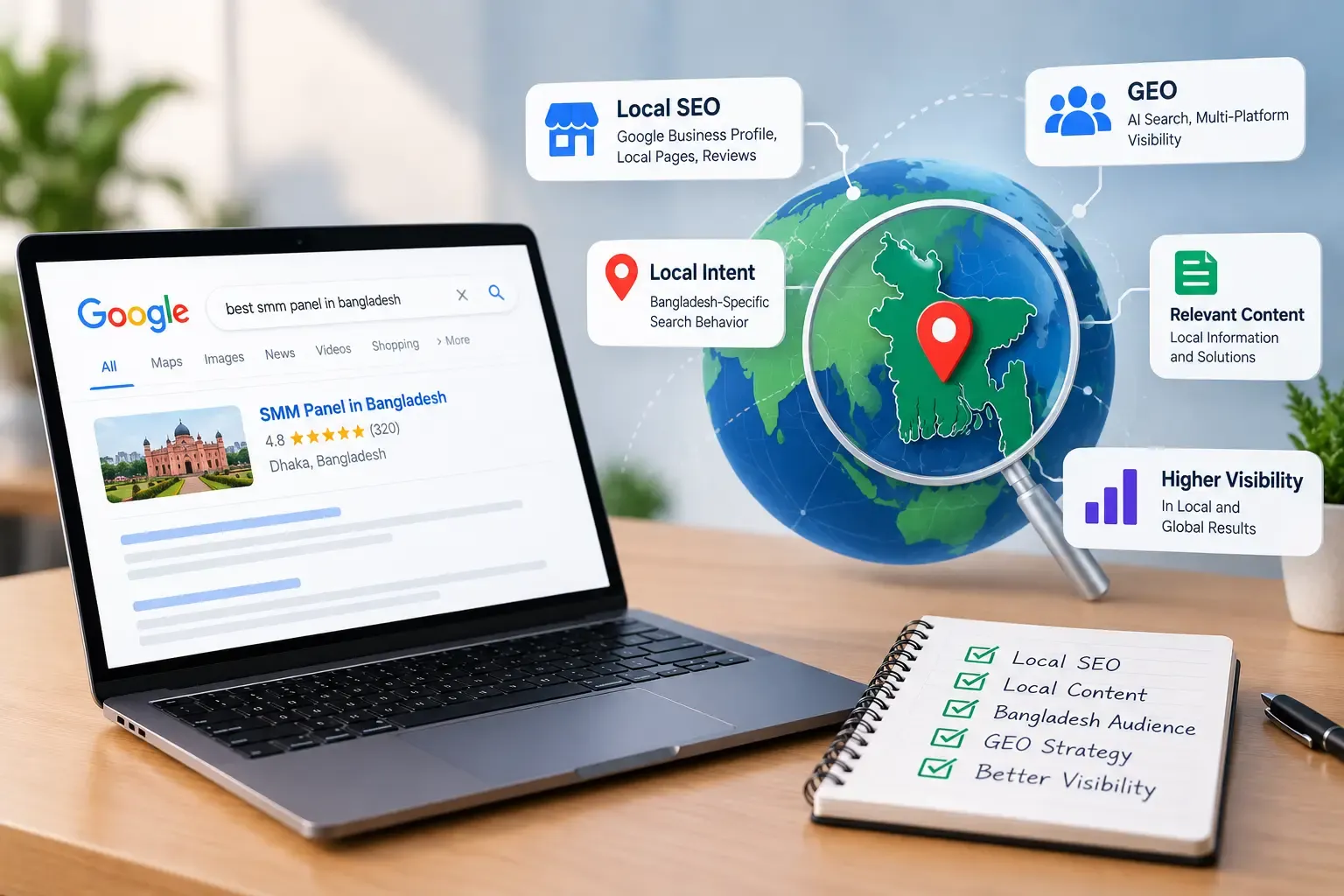
For a business serving customers in Bangladesh, local SEO still matters.
If you run a clinic in Dhaka, your customers may search for:
“dentist in Dhaka”
“best dental clinic near me”
or even a more detailed question such as:
“Where can I get dental treatment in Dhaka?”
Your website needs clear local information.
That can include your business location, service areas, contact information, business category, and genuinely useful location-specific content. Inforisen's SEO services include local SEO targeting, which can be relevant for businesses that depend on geographic search visibility. But local SEO should not become a template exercise.
Creating dozens of pages where only “Dhaka” is replaced with “Chattogram” or “Sylhet” adds little value unless each page genuinely serves a different local need.
Create Content Around Real Bangladesh Search Intent
This is where many businesses miss an opportunity. They research keywords but do not research the actual questions behind those keywords. Suppose you provide website development in Bangladesh.
A customer may care about:
- Website development cost in Bangladesh
- WordPress vs custom development
- Website speed
- Mobile usability
- Ecommerce functionality
- SEO-friendly development
- Payment integration
- Maintenance
- Security
These are not just keywords. They are buying questions. Your content should answer them.
If someone is researching website cost, for example, a guide such as how much it costs to make a website can help answer the early-stage question before the visitor is ready to discuss a project.
Use Natural Internal Links to Build Context
Internal linking is not just an SEO task.
It helps readers move from one question to the next.
Imagine a visitor reads about GEO and wants to understand traditional SEO.
You can naturally point them toward how SEO works in digital marketing.
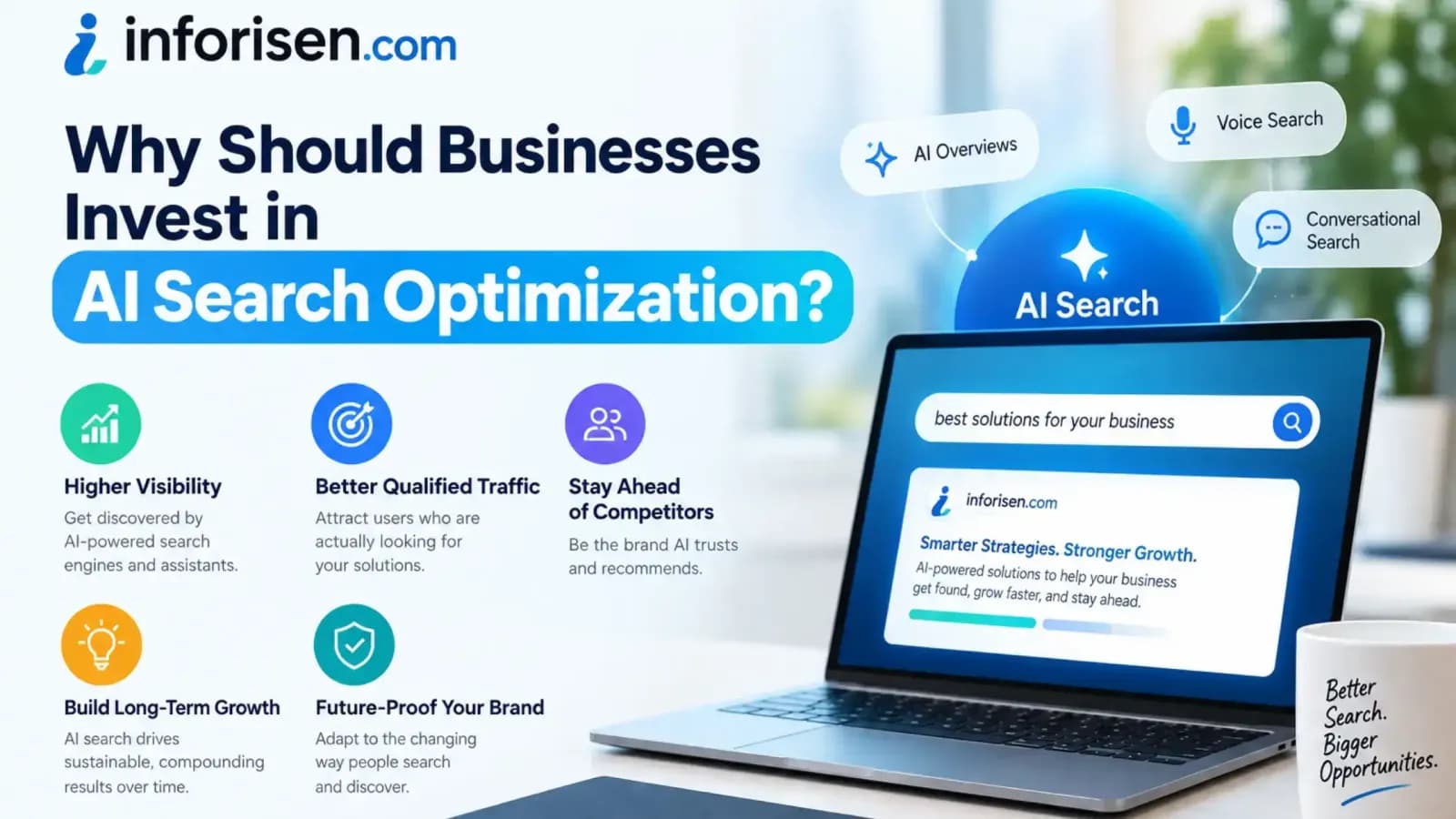
Someone researching AI search may want to know why businesses should invest in AI search optimization.
Someone with a website but poor organic visibility may need your SEO services.
The links should make sense in the sentence.
Do not add five internal links just because they exist.
Link because the reader is likely to need the next piece of information.
Your Website Structure Matters
Good GEO content cannot compensate for a website that search engines struggle to access. Important pages should be crawlable. Navigation should make sense.
Internal links should connect important pages. Your main content should be available as readable text. The website should also work properly on mobile devices.
Google's current guidance for AI search specifically recommends foundational SEO practices such as crawlability, internal linking, good page experience, accessible text, and appropriate structured data.
This is why GEO should involve more than a content writer. Technical SEO, content, website development, and UX can all affect the result.
Website UX Can Affect the Value of GEO Traffic
Getting someone to your website is only the first step. What happens next matters. If an AI tool recommends your business and the visitor lands on a confusing website, the opportunity can disappear quickly.
The visitor should be able to understand:
What do you do?
Can you solve my problem?
Why should I trust you?
What should I do next?
Good UI/UX design services can help improve navigation, information structure, user flows, and overall usability. This matters because AI search may bring visitors who are already researching a specific problem.
They should not have to hunt for the answer after arriving.
Content and Website Development Should Work Together
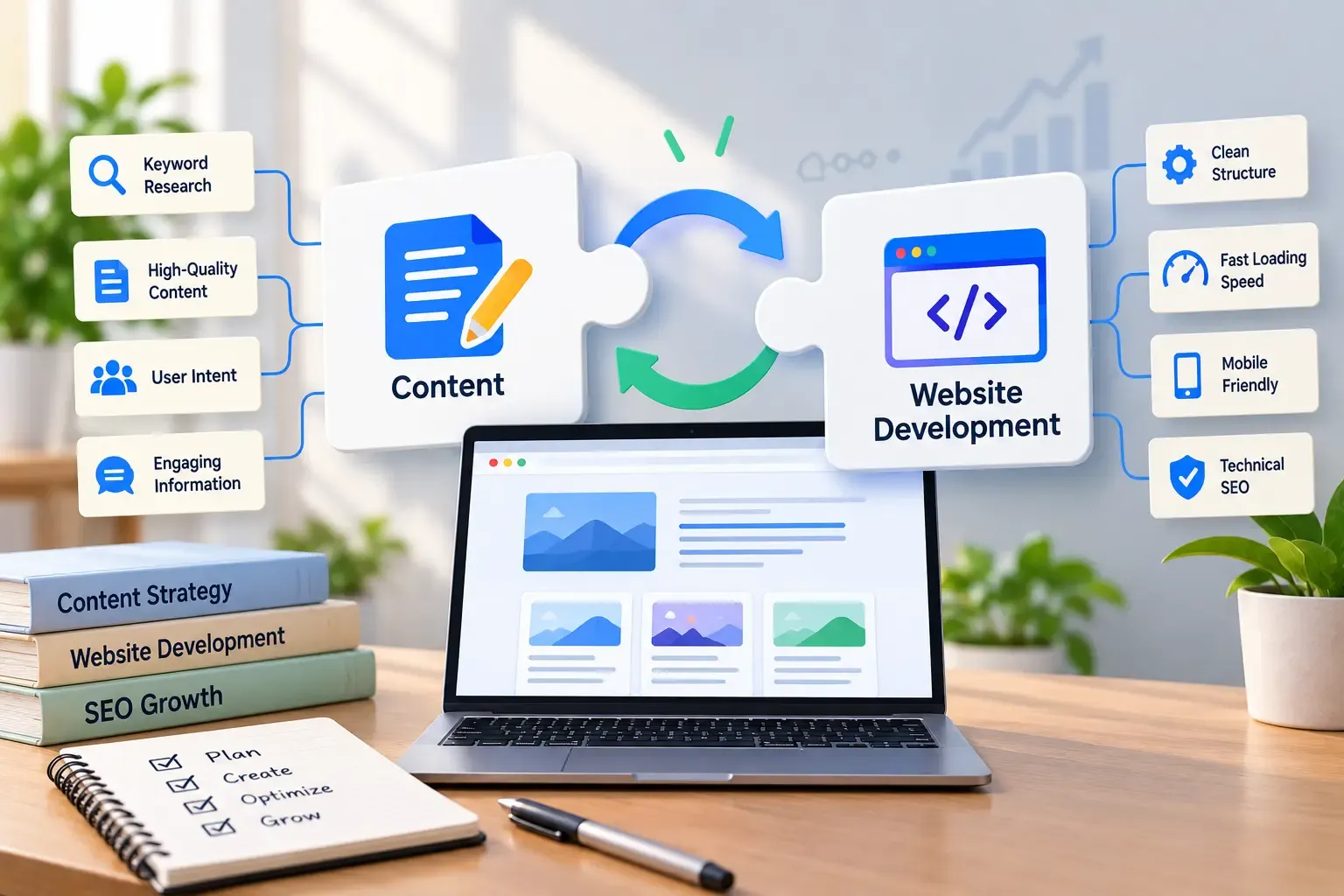
Sometimes the problem is not the content. The website itself may make it difficult to present information clearly. You may need better navigation, landing pages, technical improvements, integrations, or a different website structure.
Inforisen's website design and development services cover responsive design, custom development, performance, navigation, and SEO-friendly structure.
For more complex systems, software development services can also become relevant when the website needs custom functionality, APIs, integrations, or scalable software architecture.
This is an important GEO lesson:
Search visibility and website experience should not be treated as separate problems when they affect the same customer journey.
Build Trust Around Your Business
AI systems and human customers both need context. A business website should clearly show who is behind the business and what it actually does.
Useful trust signals can include:
- Clear company information
- Author names
- Reviewer information where appropriate
- Accurate service descriptions
- Real contact information
- Original experience or insights
- Relevant case studies
- Genuine reviews
- Consistent business information
Do not invent experience to make a page look authoritative. If you have a real case study, show it. If you have original research, explain how it was collected. If you do not have either, provide a well-researched explanation and clearly separate facts from opinion.
Google's guidance also emphasizes helpful, reliable, people-first content rather than content created mainly to manipulate search systems.
Do Not Write GEO Content Only for AI
This is one of the easiest mistakes to make.
You start thinking:
“What wording will make ChatGPT cite this?” Then the article becomes unnatural. That is the wrong direction.
Google's current guidance says you do not need to rewrite content into a special format just for generative AI search. It recommends focusing on useful, unique, people-first content and continuing to apply strong SEO fundamentals.
So write for the person first. Make the answer clear. Explain the topic properly. Add genuinely useful information. Then structure the content so search and AI systems can understand it.
Avoid GEO Myths and Shortcuts
There are plenty of claims online about guaranteed AI mentions, special GEO hacks, and secret AI files.
Be careful.
There is no reliable shortcut that guarantees ChatGPT, Gemini, Google AI Overviews, or another AI system will recommend your business.
Google specifically says there are no special schema requirements for appearing in its AI features, and it does not require special AI files or “magic” markup for that purpose.
The better investment is still the boring-looking work that actually improves your website:
Useful content + strong SEO + clear business information + technical accessibility + topical depth + good user experience.
Measure Business Value, Not Just AI Mentions
It is easy to get excited when your company appears in an AI-generated answer.
But a mention alone is not a business result.
You should also watch:
- Organic traffic
- Search impressions
- Relevant queries
- Leads
- Contact submissions
- Calls
- Sales
- Engagement
- Important landing pages
- Search Console data
If AI visibility increases but nobody contacts your business, something may still be wrong with the website or offer.
Inforisen's article on why a website may not generate leads explains this broader problem: traffic alone does not guarantee business results. Messaging, user experience, calls to action, page structure, and conversion paths all matter.
A Practical GEO Strategy for Bangladeshi Businesses
You do not need to change your entire website overnight. Start with the pages that matter most.
Step 1: Make the Business Clear
Explain who you are, what you offer, who you serve, and where you operate.
Step 2: Improve Important Service Pages
Each service page should clearly explain the problem, service, process, audience, benefits, limitations, and next step.
Step 3: Build Supporting Content
Create useful articles around the real questions your customers ask before buying.
Step 4: Connect Related Pages
Use descriptive internal links to connect blog posts, service pages, guides, and supporting resources.
Step 5: Fix Technical Problems
Check crawlability, indexing, mobile usability, site structure, page speed, broken links, and other technical issues.
Step 6: Add Real Experience
Use genuine case studies, examples, original research, expert commentary, or lessons from actual projects when available.
Step 7: Measure and Improve
Use Search Console, analytics, lead data, and customer feedback to decide what needs improvement next.
This is much more sustainable than publishing hundreds of AI-generated articles and hoping one gets cited.
How Inforisen Can Help With GEO
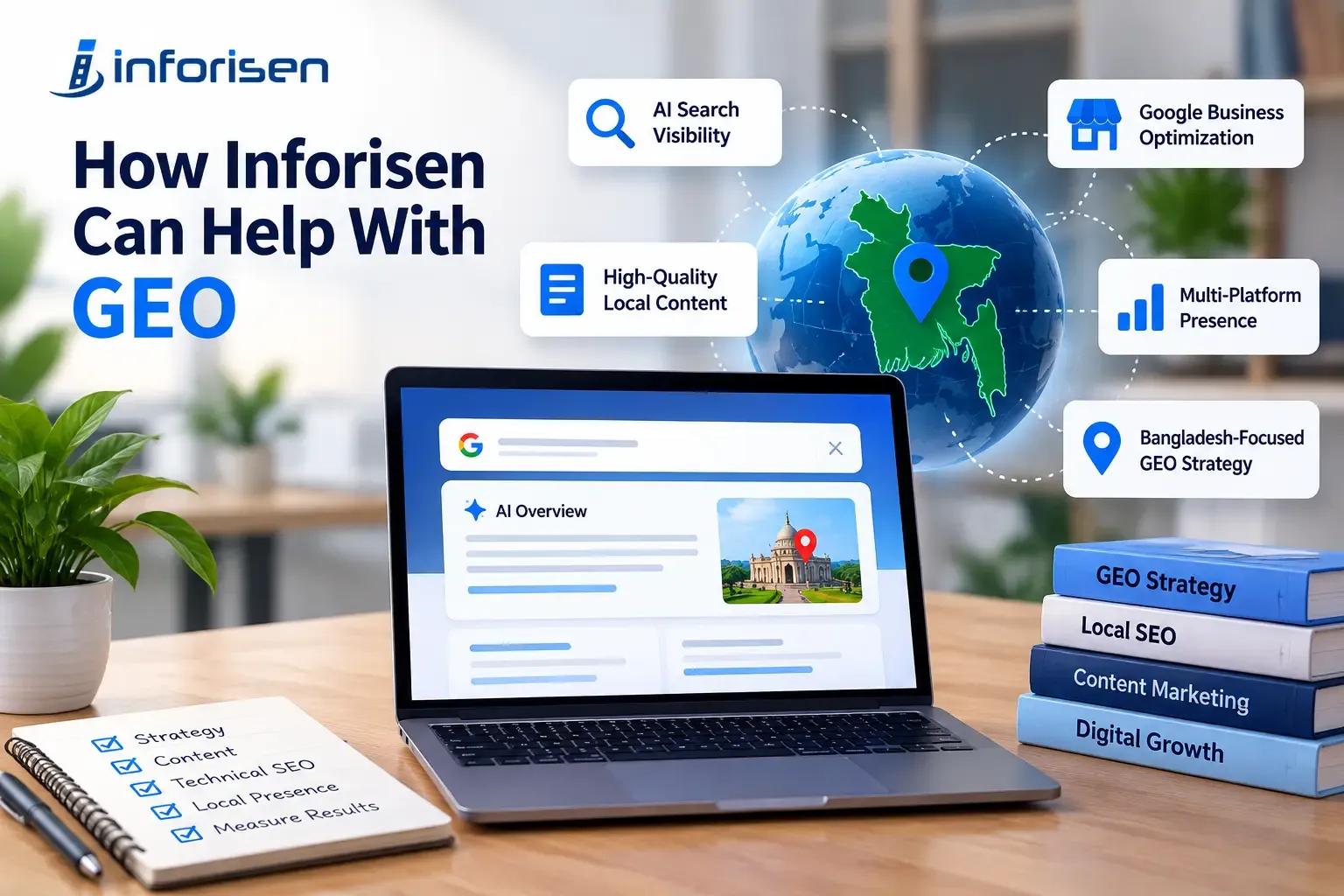
GEO often touches several parts of a website at the same time.
A business may need better content. Another may have strong content but weak technical SEO. Someone else may have good traffic but poor conversion paths.
Inforisen approaches this as a broader digital growth problem rather than treating GEO as a single isolated tactic.
Its SEO services cover technical SEO, keyword research, content optimization, link building, local SEO, and performance tracking. Its AI SEO offering also focuses on semantic search, intent-based queries, and AI-driven search experiences.
For businesses that also need website, software, or UX improvements, these services can work together instead of being handled as unrelated projects.
When GEO Makes Sense for Your Business
GEO is worth considering if your customers already research businesses through search engines, AI tools, comparison queries, or detailed online questions.
It can be especially useful for:
- SaaS companies
- Software companies
- Digital agencies
- Ecommerce businesses
- Local service businesses
- Professional services
- Healthcare businesses
- B2B companies
- Startups
- Technology companies
But you do not need to chase GEO simply because it is a new term. If your website has weak content, poor technical SEO, unclear services, or no clear conversion path, fix those foundations first. That work will help both traditional search and AI-assisted discovery.
Final Words
GEO for Bangladeshi businesses is not about finding a secret way to get mentioned by AI. It is about making your business easier to understand.
Explain what you do. Answer real customer questions. Show genuine expertise.
Build useful topic connections. Keep your website technically accessible. Add real local context. Make it easy for visitors to take the next step. When those pieces work together, your website becomes more useful to people and easier for modern search systems to understand.
That is a much stronger GEO strategy than simply adding “AI-friendly” words to an article.
FAQ
What is GEO for Bangladeshi businesses?
GEO is the practice of improving a business's online presence so generative AI and AI-powered search systems can better understand its services, expertise, audience, and relevance to specific questions.
Is GEO different from SEO?
Yes, but they overlap heavily. GEO focuses more on visibility and understanding in generative search experiences, while SEO covers broader search visibility. Strong technical SEO, useful content, internal linking, and good website structure support both.
How can a Bangladeshi business improve GEO?
Start with clear business information, useful service pages, Bangladesh-specific content where relevant, strong internal linking, technical SEO, local SEO, original expertise, and content that directly answers customer questions.
Does GEO guarantee ChatGPT or Google AI mentions?
No. There is no reliable way to guarantee that an AI system will mention or recommend a business. The better approach is to build useful, trustworthy, accessible information that AI systems can understand and users can rely on.
Does local SEO help GEO?
It can. For businesses serving specific areas, accurate local business information, relevant local content, and a strong local search presence can provide useful geographic context for search and AI-assisted discovery.
Does a business need special GEO schema?
Not specifically for Google AI Overviews or AI Mode. Google's current guidance says there are no special schema requirements for appearing in those AI features. Structured data can still be useful for eligible search features when implemented correctly.
Should businesses create separate content for every AI query?
No. Creating large numbers of near-identical pages for every possible AI query is not a good strategy. Focus on useful topics, real customer needs, and content that covers a subject properly.

.webp&w=3840&q=75)


.webp&w=3840&q=75)