ByMd BaizidReviewed by:Yunus A. Polash
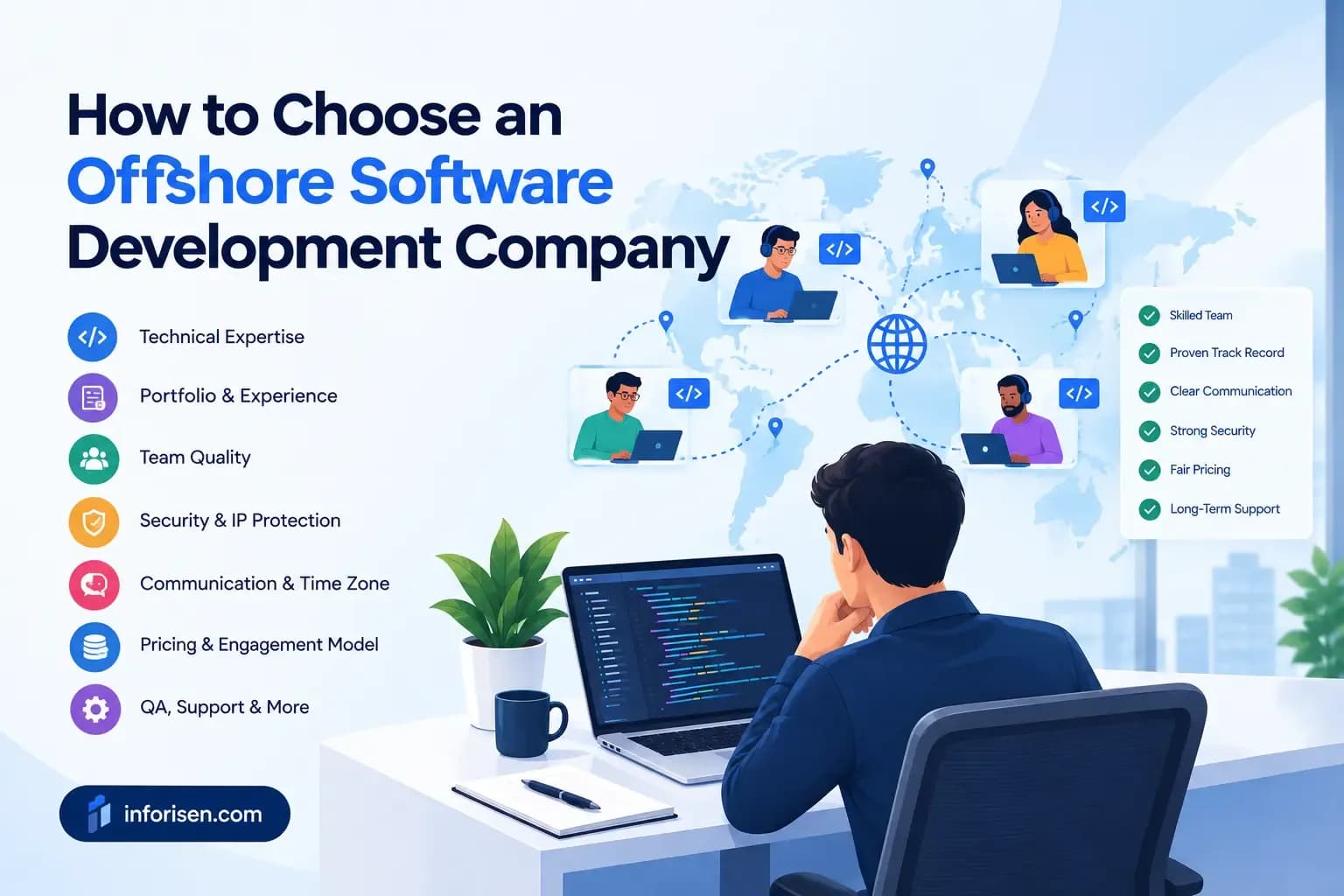
Human WrittenHow to Choose an Offshore Software Development Company
Choosing the right offshore software development company takes more than comparing prices. Look at technical skills, communication, security, project process, client experience, and long-term support. A reliable partner should understand your goals, reduce risks, and help your software grow successfully.
Offshore software development company selection can directly affect your project cost, delivery speed, software quality, and long-term growth. The right partner gives you access to skilled developers, modern technologies, and a reliable development process without the pressure of building a large in-house team.
The wrong one may lead to missed deadlines, communication problems, security risks, and costly rework. So, how can you tell which company deserves your trust?
In this article , you will learn how to evaluate technical expertise, industry experience, communication, pricing, security, development methods, client reviews, support, and other key factors before making a final decision.
What Is Offshore Software Development?
Offshore software development means hiring a software team from another country to build or manage your digital product.
An offshore software development company can provide services such as planning, design, development, testing, deployment, and maintenance.
Businesses use offshore development to access skilled professionals without building a large in-house team. These teams can support web apps, mobile apps, SaaS products, cloud solutions, AI, and more.
Offshore teams may work on dedicated or project-based models. Clear communication, documentation, secure processes, and defined timelines help ensure successful collaboration.
Why Businesses Choose Offshore Software Development
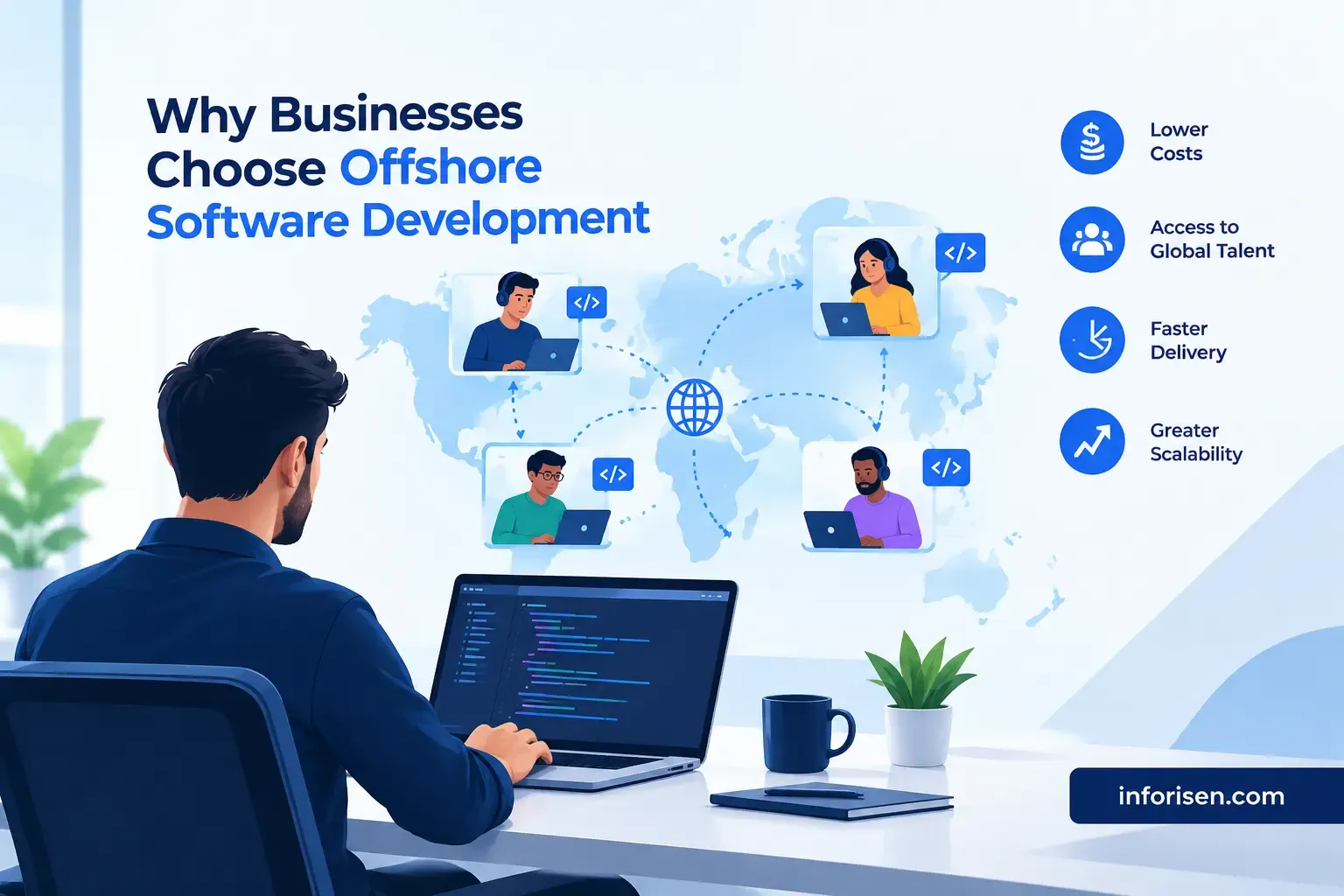
Building software in-house isn't always realistic, especially when you need specific skills fast, want to keep costs under control, or simply can't justify growing your internal team just yet. That's where offshore software development comes in.
Of course, this only works if you're partnering with the right offshore team one that actually gets your goals, your tech stack, and how you like to work.
Access to a Wider Talent Pool
Hiring locally sounds simple until you try it. Weeks go by just posting the job, screening candidates, and running interviews. Add onboarding and training, and your project hasn't even started.
Go offshore, and suddenly you're not limited to whoever's available in your city. You can bring in people who actually specialize in AI, SaaS, cloud infrastructure, mobile development, DevOps, APIs, security, automation whatever your project actually calls for. Instead of settling for "good enough" local talent, you build a team around what you actually need.
More Flexible Development Costs
Costs shift depending on where your developers are based, what they specialize in, and how complex the work is, and offshore teams often make that budget stretch further.
But don't chase the lowest number you see. A rock-bottom quote usually means something's missing: testing, documentation, project management, post-launch support, maybe even security. Look at what's actually included, not just the price tag. Paying a bit more upfront for a team that knows what they're doing usually saves you from costly rework down the line.
Faster Team Expansion
Hiring every role in-house one at a time, through the usual recruit-interview-onboard cycle, takes time you often don't have.
An offshore team that's already established typically comes with developers, QA engineers, designers, DevOps people, and project managers already in place. So when your workload spikes or a project suddenly needs another skill set, you're not stuck waiting months to catch up.
Greater Development Flexibility
Software plans rarely survive contact with reality. Priorities shift, feedback comes in, new features get added, and your team needs to shift with it.
A good offshore partner can flex with you. Start lean with a couple of developers, then bring in a designer or a cloud specialist later if the project demands it. This is exactly why it works so well for startups still figuring things out, companies modernizing old systems, or teams scaling something that's already gaining traction.
More Focus on Core Business Activities
Running a large in-house dev team eats up time recruiting, managing, and troubleshooting day-to-day issues. That's time your leadership team could be spending elsewhere.
With an offshore partner handling the technical execution, your internal team gets to focus on what actually moves the needle: product direction, customers, sales, marketing the stuff that grows the business, not just the codebase.
Key Factors to Consider When Choosing an Offshore Software Development Company
A good offshore software development company should offer more than a low price. You need a team that understands your product, communicates clearly, protects your data, and delivers reliable software.
Before signing a contract, look closely at the company’s skills, past projects, development process, pricing, security, and long-term support.
1. Check Technical Expertise and Experience
Start with the technologies your project actually needs. A company may list dozens of programming languages on its website, but that does not prove real experience.
Ask to see similar projects. For example, if you plan to build a SaaS platform with subscriptions, dashboards, APIs, and user roles, choose a team that has already handled similar systems.
A strong team should also explain why it recommends a certain technology and how that choice will support future growth.
2. Review Portfolio and Case Studies
Do not judge a portfolio by screenshots alone. Look at the problem, solution, technology, project scope, and final result. For example, a case study showing how a company improved checkout speed, connected payment APIs, or reduced manual work gives you more useful information than a polished homepage image.
At Inforisen, reviewing relevant software and digital product projects can help you understand whether the team’s experience matches your business needs.
3. Pay Attention to Communication
Offshore projects often fail because of poor communication, not poor coding.Ask who will manage your project, how often you will receive updates, and how the team handles urgent issues. You should always know what is finished, what is in progress, and what needs your approval.
For example, even with a six-hour time difference, one or two shared working hours each day can keep meetings, feedback, and decisions moving smoothly.
4. Understand Their Development Process
Ask the company how it takes a project from idea to launch.A reliable team normally starts with requirements and planning before moving into design, development, testing, and deployment. This reduces confusion once coding begins.
For example, testing a small product feature every two weeks allows you to give feedback early instead of discovering major problems at the end.
5. Check Quality Assurance
Testing should happen throughout development, not only before launch. Ask whether the company has dedicated QA engineers and how it tests features, integrations, performance, security, and different devices.
Finding a checkout or login problem during development is far easier and cheaper than fixing it after customers start using the product.
6. Confirm Security and IP Ownership
Your offshore team may access source code, customer information, servers, or internal business systems. You need clear security rules from the beginning. The contract should explain who owns the source code, designs, documentation, databases, and other project assets.
For example, a SaaS company handling customer data should control repository access, passwords, production permissions, and backups instead of giving every developer unrestricted access.
7. Compare Pricing Carefully
Do not choose a company only because it offers the lowest hourly rate. One proposal may include development but exclude testing, project management, deployment, or maintenance. Another may cost more but cover the complete delivery process.
For a small project with fixed requirements, fixed-price development may work well. Growing products often benefit more from time-and-materials or a dedicated development team.
8. Read Client Reviews
Client reviews can show how a company performs after the sales call ends. Look for comments about communication, deadlines, technical quality, flexibility, and support. Consistent feedback from several clients is more useful than one impressive testimonial.
If you plan a large project, ask to speak with a previous client. Their experience can reveal how the team handled delays, changes, and unexpected technical problems.
9. Check Whether the Team Can Scale
Your project may need more people as it grows. You might begin with two developers and later need QA engineers, designers, DevOps specialists, or mobile developers. Ask how quickly the company can add the right people.
Also ask what happens when a developer leaves. Good documentation and proper knowledge transfer prevent your project from depending on one person.
10. Ask About Post-Launch Support
Software still needs work after launch. New browser versions, security updates, API changes, customer feedback, and growing traffic can create new technical needs.
For example, an e-commerce platform may work well with 500 daily visitors but require infrastructure changes when traffic reaches several thousand visitors.
Choose an offshore software development company that can provide bug fixes, updates, monitoring, performance improvements, and future development when your product grows.
How to Evaluate and Shortlist Offshore Software Development Companies
Start with a clear project brief. Define your goals, features, users, budget, timeline, technology needs, security requirements, integrations, and support expectations.
Then review each company’s portfolio, case studies, services, and client feedback. Remove vendors that lack relevant experience or cannot explain their development process clearly.
Schedule discovery calls with the strongest candidates. A reliable offshore software development company should ask about your business problem before suggesting technology, price, or timelines.
For a large project, you can also request developer profiles, architecture suggestions, sample documentation, testing plans, or a small paid pilot.
Use a simple scorecard to compare each company fairly.
This approach helps you choose based on real capability instead of price or a strong sales presentation.
Questions to Ask Before Hiring an Offshore Development Partner
Ask direct questions before signing any agreement. Clear answers can reveal how the team will actually handle your project.
Have You Built Similar Software Before?
Ask for examples of projects with similar features, users, integrations, or technical requirements.Relevant experience can reduce mistakes and shorten the learning process.
Who Will Work on My Project?
Ask who will handle development, design, testing, project management, and technical decisions.Make sure the people presented during sales discussions will also support the actual project.
How Will We Communicate?
Agree on meeting times, reporting frequency, tools, response times, and working-hour overlap.You should always know who to contact when an urgent issue appears.
How Do You Maintain Code Quality?
Ask about code reviews, testing, documentation, version control, deployment, and development standards.A good team should have a repeatable quality process instead of relying on individual developers.
What Happens After Launch?
Ask about bug fixes, monitoring, updates, maintenance, security patches, and future feature development.Also confirm what the contract includes and what will cost extra.
Common Mistakes to Avoid
Choosing the wrong offshore partner can lead to delays, poor code quality, security issues, and unexpected costs. Avoid these common mistakes to protect your budget, timeline, and long-term software performance.
Choosing Only by Price
The cheapest proposal can become expensive if poor code, delays, or weak testing create rework.Compare total value, not only the hourly rate.
Ignoring Communication
Strong technical skills cannot fix poor communication.If a company gives unclear answers or slow responses before the project starts, the same problem may continue during development.
Skipping Portfolio Research
Do not rely only on marketing claims. Review real projects and look for experience that matches your software type, complexity, and industry.
Starting With Unclear Requirements
Vague requirements often create wrong estimates, scope changes, and delays. Document your main features, priorities, deadlines, and expectations before development begins.
Ignoring Security and Ownership
Confirm who owns the source code, designs, documentation, and other project assets. Put confidentiality, access control, and intellectual property terms in the contract.
Forgetting Long-Term Support
Software needs updates after launch. Choose a partner that can continue supporting the product when users, traffic, technology, or business needs change.
Accepting Unrealistic Deadlines
Be careful when a company promises a very short delivery time before understanding the project. Ask how it calculated the timeline and what assumptions the estimate includes.
Why Businesses Consider Inforisen for Software Development
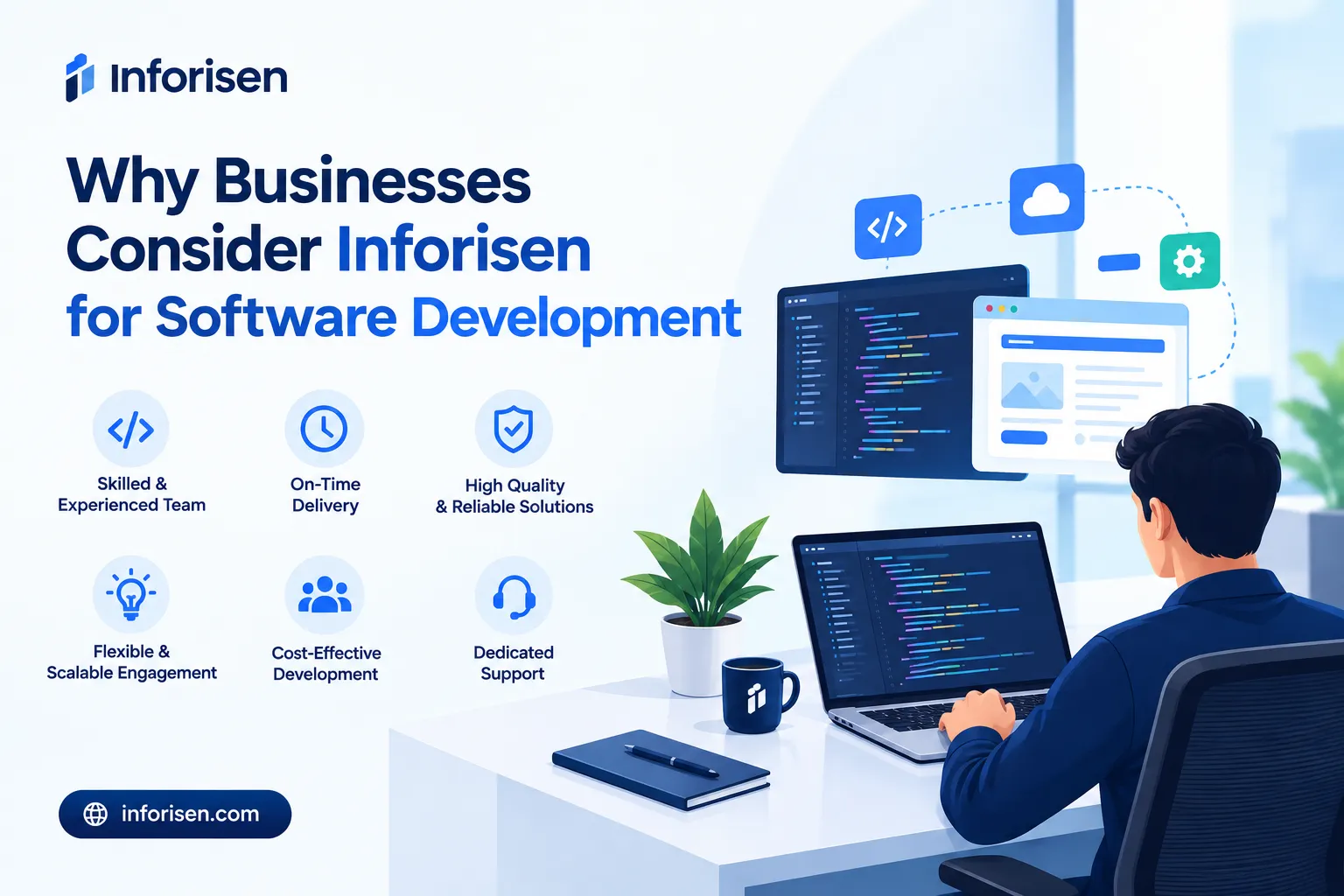
Inforisen supports businesses that need software, websites, mobile applications, SaaS products, cloud solutions, AI, automation, DevOps, UI/UX design, and ongoing software maintenance.
The team can support a project from early planning and design through development, testing, launch, and future improvements.
Inforisen also combines software development with services such as web design, SEO, e-commerce, and digital growth support when a business needs several services under one team.
A project should start with clear requirements. This helps define the right team, technology, timeline, budget, security process, and support model.
Conclusion
Choosing an offshore software development company becomes easier when you focus on experience, communication, security, development quality, pricing, and long-term support.
Do not choose a partner only because it offers the lowest rate. Review real projects, speak with the delivery team, understand the process, and ask clear questions before signing a contract.
For a large project, a technical assessment or small pilot can give you a better view of the team’s actual performance. The right offshore partner should work as an extension of your business, solve technical problems, reduce project risks, and support your software as it grows.
Frequently Asked Questions
1. How do I choose a good offshore software development company?
Check the company’s technical experience, portfolio, communication process, security practices, pricing, testing process, and post-launch support. Choose a team with experience that matches your project.
2. Is offshore software development cheaper?
It can reduce development costs, but price depends on location, skills, project size, and complexity. Compare the complete project cost instead of choosing the lowest hourly rate.
3. How can I check an offshore developer’s quality?
Review case studies, speak with previous clients, interview proposed developers, check testing practices, and request a small pilot project when necessary.
4. How do offshore teams handle time zone differences?
Good teams agree on shared working hours, meeting schedules, response times, communication tools, and reporting routines before the project starts.
5. What should an offshore development contract include?
The contract should cover project scope, pricing, deadlines, responsibilities, source code ownership, confidentiality, security, payment terms, support, and change management.

.webp&w=3840&q=75)



.jpg&w=3840&q=75)